
How to dial in espresso is one of the most valuable skills every home barista should learn. Even with premium coffee beans and a high-quality espresso machine, your espresso can taste sour, bitter, or weak if the extraction isn’t properly dialed in.
Dialing in espresso means adjusting variables such as grind size, coffee dose, brew ratio, and extraction time until you achieve a balanced shot with rich sweetness, pleasant acidity, and smooth body.
If you’ve ever wondered why your espresso tastes different from one day to the next, learning how to dial in espresso will help you brew consistently excellent coffee at home.
In this guide, we’ll explain the step-by-step process of dialing in espresso, common mistakes to avoid, and practical tips to improve every shot.
How to Dial In Espresso: What Does “Dialing In” Mean?
Dialing in is the process of adjusting your espresso recipe to get the best possible extraction from your coffee beans.
Because every coffee is different, there’s no universal setting that works for every bag of beans. Factors such as roast level, freshness, humidity, and grinder performance all influence the final result.
When dialing in espresso, baristas typically adjust:
- Grind size
- Coffee dose
- Yield (espresso output)
- Extraction time
- Water temperature (when necessary)
The goal is simple: produce a balanced espresso with sweetness, body, aroma, and a clean finish.
How to Dial In Espresso: Why It Matters
Even small adjustments can dramatically change the taste of your espresso.
A shot that extracts too quickly may taste:
- Sour
- Thin
- Sharp
- Underdeveloped
A shot that extracts too slowly may taste:
- Bitter
- Dry
- Harsh
- Over-extracted
Learning how to dial in espresso allows you to identify these problems and correct them before they ruin your coffee.
How to Dial In Espresso: Start with Fresh Coffee Beans
Great espresso begins with fresh beans.
Ideally, use coffee that was roasted 7–30 days ago. Beans that are too fresh may release excessive carbon dioxide, while older beans often lose aroma, sweetness, and crema.
For the best results:
- Buy whole beans instead of pre-ground coffee.
- Store beans in an airtight container away from light and heat.
- Grind only what you need before brewing.
Fresh coffee provides a more stable extraction and makes dialing in much easier.
How to Dial In Espresso: Choose the Right Dose
The coffee dose refers to the amount of ground coffee placed in your portafilter.
Although the ideal dose depends on your basket size, most double-shot baskets perform well with:
- 18–20 grams of coffee
Keeping the dose consistent is essential.
Changing both the dose and grind size at the same time makes it difficult to understand which adjustment actually improved—or worsened—your espresso.
A digital coffee scale is one of the most useful tools for maintaining consistency.
How to Dial In Espresso: Set a Target Brew Ratio
Your brew ratio compares the amount of dry coffee to the amount of liquid espresso produced.
A common starting point is:
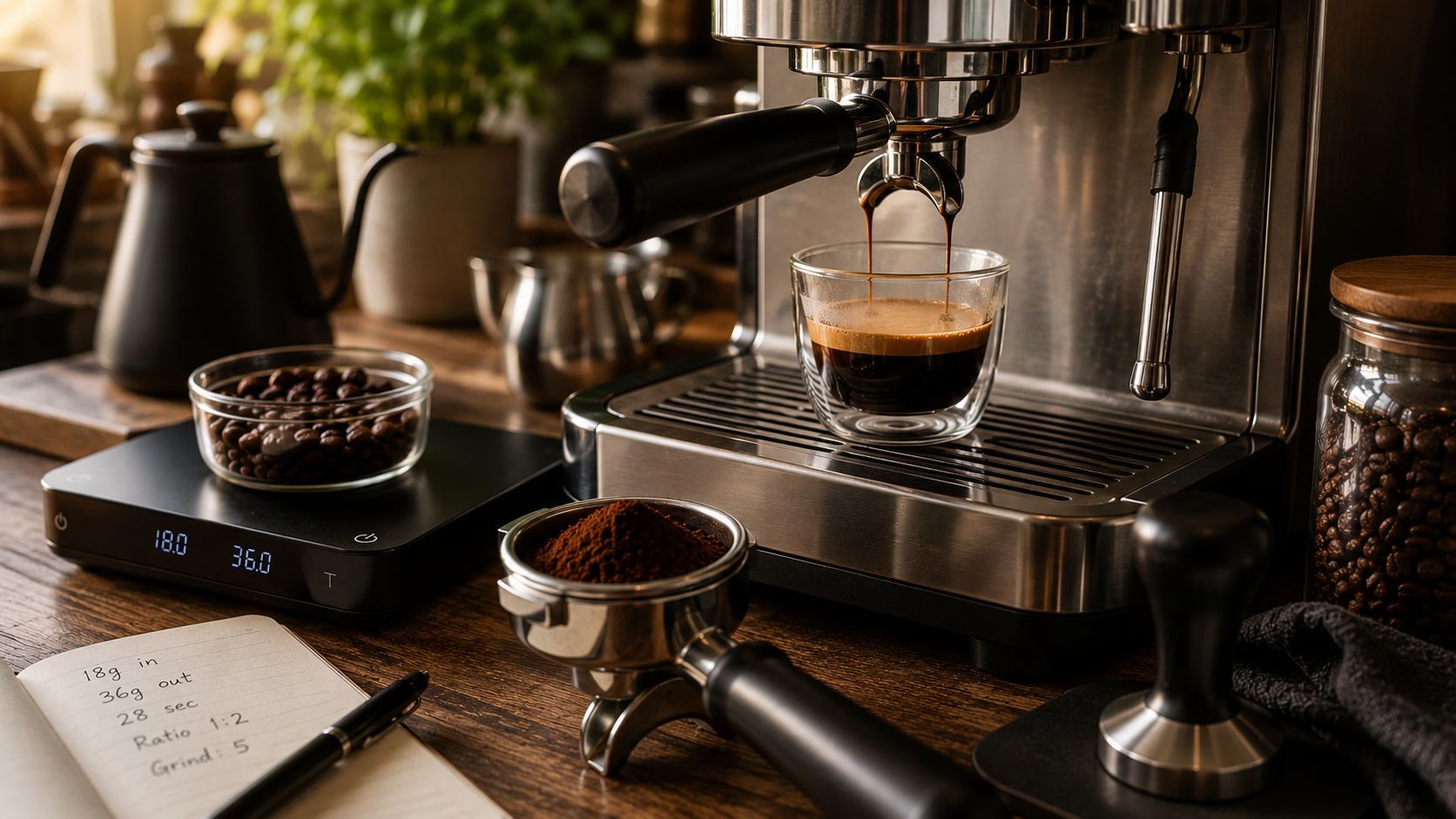
- 18 g coffee → 36 g espresso
- Brew ratio: 1:2
This ratio delivers a balanced espresso for many medium and medium-dark roasted beans.
From there, you can make small adjustments based on taste:
- Shorter ratio (1:1.5): Richer body and stronger intensity
- Longer ratio (1:2.5): Cleaner cup with greater clarity
Avoid changing multiple variables at once. Adjust one factor, taste the result, then continue refining your recipe.
How to Dial In Espresso: Adjust Your Grind Size
Grind size is the most important variable when learning how to dial in espresso.
A small adjustment can completely change your extraction.
As a general rule:
- Grind finer if the espresso flows too quickly and tastes sour.
- Grind coarser if the espresso flows too slowly and tastes bitter.
Make only one small adjustment at a time. Even a slight change can significantly improve your shot.
If possible, use a burr grinder designed specifically for espresso to achieve consistent particle size.
How to Dial In Espresso: Monitor Extraction Time
Extraction time is one of the easiest ways to evaluate your espresso recipe.
For a standard double espresso, a good starting point is:
- 25–30 seconds
- 18 g in → 36 g out
Keep in mind that extraction time is a guideline—not a strict rule.
Some light-roasted coffees may perform better with slightly longer extractions, while darker roasts often taste best with shorter extraction times.
Always let taste guide your final adjustments.
How to Dial In Espresso: Evaluate the Taste
Your palate is the best tool for dialing in espresso.
After each shot, ask yourself:
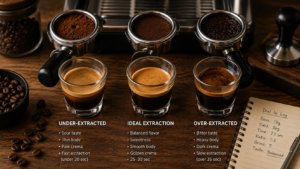
Sour?
Your espresso is likely under-extracted.
Try:
- Grinding finer
- Increasing extraction time
- Increasing yield slightly
Bitter?
Your espresso is likely over-extracted.
Try:
- Grinding coarser
- Reducing extraction time
- Lowering the yield
Balanced?
If the espresso tastes sweet, smooth, and finishes cleanly with pleasant acidity, you’ve found a well-dialed-in recipe.
How to Dial In Espresso: Make Small Adjustments
One of the biggest mistakes beginners make is changing several variables at the same time.
Instead:
- Pull a shot.
- Taste the espresso.
- Change only one variable.
- Pull another shot.
- Compare the results.
This systematic approach makes it much easier to understand how each adjustment affects flavor.
Patience is one of the most valuable skills in espresso brewing.
How to Dial In Espresso: Keep a Brew Log
Recording your espresso recipes helps you achieve consistent results.
A simple brew log should include:
- Coffee bean name
- Roast date
- Dose
- Yield
- Extraction time
- Grind setting
- Taste notes
After a few bags of coffee, you’ll begin to notice patterns that make future dial-ins much faster and more accurate.
Many experienced baristas consider a brew journal just as important as a quality grinder.
How to Dial In Espresso: Common Dial-In Mistakes
Even experienced home baristas occasionally struggle with inconsistent espresso.
Avoid these common mistakes:
- Using stale coffee beans
- Skipping the coffee scale
- Adjusting multiple variables at once
- Ignoring water quality
- Using uneven tamping pressure
- Forgetting to clean the grinder and espresso machine
Good espresso is built on consistency. Small habits often make a bigger difference than expensive equipment.
Recommended Tools for Dialing In Espresso
The right equipment makes the dialing-in process faster and more reliable.
Essential tools include:
- Espresso burr grinder
- Digital coffee scale with timer
- Distribution tool (optional)
- Quality tamper
- Bottomless portafilter (optional)
- Notebook or brewing app
These tools help eliminate guesswork and allow you to repeat great results with every bag of coffee.
How to Dial In Espresso Frequently Asked Questions
How long should it take to dial in espresso?
It depends on the coffee beans and your equipment.
Most home baristas can dial in a new bag of coffee within 3–6 shots by making small adjustments to grind size and carefully tasting each extraction.
What is the ideal brew ratio for espresso?
A 1:2 brew ratio is the most common starting point.
For example:
- 18 g coffee → 36 g espresso
- 20 g coffee → 40 g espresso
From there, adjust the ratio based on the roast level and your preferred flavor profile.
Why does my espresso taste sour?
Sour espresso is usually under-extracted.
Common causes include:
- Grind is too coarse
- Extraction is too fast
- Yield is too low
- Water temperature is too low
Grinding slightly finer is often the best first adjustment.
Why does my espresso taste bitter?
Bitter espresso is typically over-extracted.
Possible causes include:
- Grind is too fine
- Extraction is too long
- Yield is too high
Try grinding slightly coarser or shortening the extraction time.
Final Thoughts
Learning how to dial in espresso is one of the best investments you can make as a home barista.
By controlling grind size, dose, brew ratio, and extraction time, you can consistently produce espresso that is balanced, sweet, and full of flavor.
Remember that there is no universal recipe. Every coffee bean behaves differently depending on its origin, roast level, and freshness. The key is to adjust one variable at a time, taste carefully, and record your results.
With patience and practice, dialing in espresso becomes faster, easier, and far more enjoyable—allowing you to get the very best from every bag of coffee.
For more information about espresso brewing standards, coffee quality, and barista education, visit the Specialty Coffee Association (SCA).
Related Guides
Continue improving your home espresso skills:
- What Is Espresso? A Beginner’s Guide for Coffee Lovers
- Best Coffee Beans for Espresso: How to Choose the Right Beans
- Espresso Roast vs Dark Roast: 7 Key Differences Every Coffee Lover Should Know
- Arabica vs Robusta for Espresso: 7 Key Differences Every Coffee Lover Should Know
- How to Froth Milk for Espresso at Home