
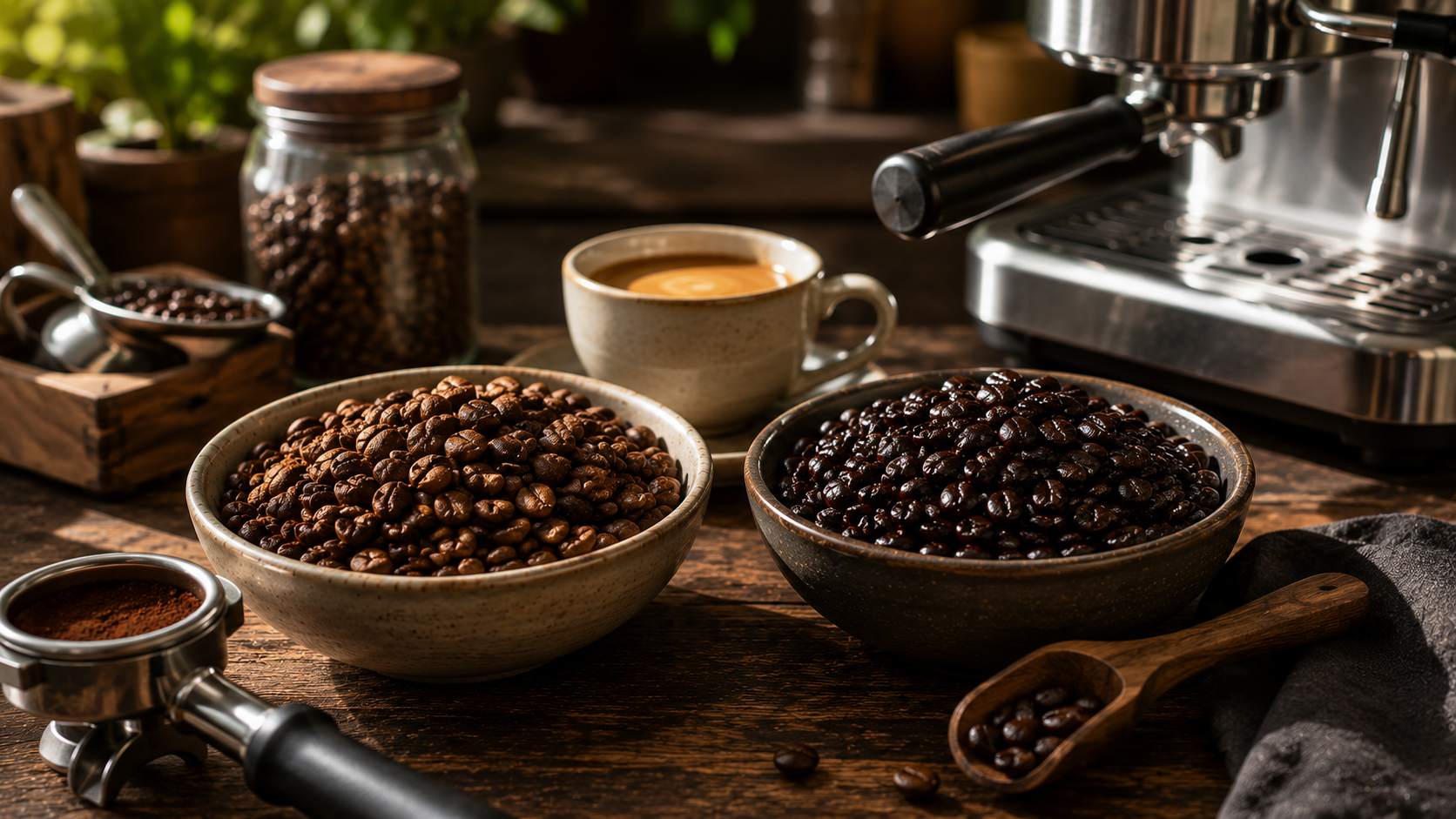
Arabica vs Robusta for espresso is one of the most important comparisons for anyone who wants to brew better espresso. While both coffee species are widely used around the world, they produce noticeably different flavors, aromas, crema, and caffeine levels.
Arabica beans are known for their smooth sweetness and complex flavor notes, making them the preferred choice for many specialty coffee roasters. Robusta beans, on the other hand, deliver a stronger body, higher caffeine content, and thicker crema, making them popular in traditional Italian espresso blends.
Understanding arabica vs robusta for espresso will help you choose the right coffee beans based on your taste preferences, brewing style, and desired espresso experience.
In this guide, we’ll compare Arabica and Robusta in detail, covering flavor, caffeine, crema, price, growing conditions, and which beans are best for your home espresso machine.
Arabica vs Robusta for Espresso: What Is Arabica?
Arabica (Coffea arabica) accounts for approximately 60–70% of the world’s coffee production and is widely considered the highest-quality coffee species.
Arabica thrives at higher elevations with cooler temperatures, allowing the beans to develop more complex sugars and delicate flavor compounds.
Typical characteristics include:
- Smooth and balanced flavor
- Natural sweetness
- Bright acidity
- Chocolate, caramel, berry, floral, or citrus tasting notes
- Lower caffeine content
Because of its refined flavor profile, Arabica is the dominant choice in specialty coffee shops and premium espresso blends.
Arabica vs Robusta for Espresso: What Is Robusta?
Robusta (Coffea canephora) is grown primarily in lower-altitude tropical regions and is valued for its durability and high productivity.
Compared to Arabica, Robusta plants are more resistant to disease and pests, making them easier and less expensive to cultivate.
Typical characteristics include:
- Bold and earthy flavor
- Strong bitterness
- Heavy body
- Nutty and woody notes
- Higher caffeine content
- Thick, persistent crema
Although Robusta is sometimes criticized for its bitterness, high-quality Robusta plays an important role in many classic Italian espresso blends by enhancing crema and body.
Arabica vs Robusta for Espresso: Key Differences
Although both beans can produce excellent espresso, they offer very different experiences.
| Feature | Arabica | Robusta |
|---|---|---|
| Flavor | Smooth & Sweet | Bold & Bitter |
| Acidity | Medium to High | Low |
| Caffeine | Lower | Higher |
| Crema | Good | Excellent |
| Body | Medium | Full |
| Price | Higher | Lower |
| Specialty Coffee | Very Common | Less Common |
The biggest difference in arabica vs robusta for espresso comes down to balance versus intensity.
Arabica emphasizes sweetness, aroma, and complexity, while Robusta focuses on strength, crema, and a bold coffee flavor.
Arabica vs Robusta for Espresso: Flavor Comparison
Flavor is the primary reason many coffee lovers prefer one bean over the other.
Arabica
Arabica beans often feature:
- Chocolate
- Caramel
- Brown sugar
- Citrus
- Berry
- Floral aromas
These characteristics create an espresso that is smooth, aromatic, and layered with complexity.
Robusta
Robusta beans typically offer:
- Dark chocolate
- Roasted nuts
- Earthy notes
- Woody flavors
- Bittersweet finish
The stronger profile makes Robusta especially appealing to people who enjoy traditional, full-bodied espresso with a pronounced roasted character.
Arabica vs Robusta for Espresso: Crema Quality
One of Robusta’s greatest strengths is its ability to produce a thick, long-lasting crema.
This is why many Italian espresso blends include 10–30% Robusta, even when Arabica is the primary ingredient.
Arabica also produces beautiful crema when the beans are fresh and properly extracted, but it tends to be:
- Lighter in color
- Softer in texture
- More delicate
Robusta crema is generally:
- Darker golden-brown
- Thicker
- More persistent
- Richer in texture
For espresso enthusiasts who value visual presentation as much as flavor, the crema difference is often one of the most noticeable distinctions.
Arabica vs Robusta for Espresso: Caffeine Content
One of the biggest differences in arabica vs robusta for espresso is caffeine.
Robusta naturally contains much more caffeine than Arabica because caffeine acts as a natural defense against insects and diseases.
Average caffeine content:
| Coffee Bean | Average Caffeine |
|---|---|
| Arabica | 1.2–1.5% |
| Robusta | 2.2–2.7% |
That means Robusta can contain nearly twice as much caffeine as Arabica.
If you’re looking for a stronger energy boost, Robusta may be the better option. If you prefer a smoother cup that’s easier to enjoy throughout the day, Arabica is usually the preferred choice.
Arabica vs Robusta for Espresso: Growing Conditions
The environment where coffee grows has a significant impact on its flavor and quality.
Arabica
Arabica coffee thrives in:
- High elevations (900–2,000 meters)
- Cooler climates
- Rich volcanic soil
- Moderate rainfall
These conditions help the beans mature slowly, allowing more sugars and complex flavors to develop.
Robusta
Robusta grows well in:
- Lower elevations (0–900 meters)
- Hot, humid climates
- Tropical regions
- Areas with higher disease pressure
Because Robusta plants are naturally more resilient, they are easier to cultivate and generally produce higher yields.
Arabica vs Robusta for Espresso: Price Comparison
Price is another major difference.
Arabica is typically more expensive because:
- It requires more careful cultivation.
- It is more vulnerable to pests and diseases.
- Harvesting often takes place in mountainous regions.
- Specialty-grade Arabica undergoes strict quality control.
Robusta is generally more affordable because it is easier to grow and produces larger harvests.
However, premium Robusta has become increasingly popular in recent years, especially among specialty coffee roasters seeking thicker crema and fuller body.
Arabica vs Robusta for Espresso: Which Bean Makes Better Espresso?
There isn’t a single correct answer.
The ideal bean depends on your taste preferences.
Choose Arabica if you:
- Enjoy sweet and balanced espresso
- Prefer fruity or floral aromas
- Like specialty coffee
- Drink espresso without milk
- Appreciate complex flavors
Choose Robusta if you:
- Prefer bold, intense coffee
- Want thicker crema
- Need more caffeine
- Enjoy traditional Italian-style espresso
- Frequently make strong milk-based drinks
Many professional baristas recommend experimenting with both to discover which profile you enjoy most.
Arabica vs Robusta for Espresso: Espresso Blends
Some of the world’s most popular espresso blends combine Arabica and Robusta.
A common ratio is:
- 80% Arabica / 20% Robusta
- 90% Arabica / 10% Robusta
This combination offers:
- Smooth sweetness from Arabica
- Thick crema from Robusta
- Rich body
- Balanced flavor
- Excellent performance in espresso machines
Many Italian espresso brands have relied on this approach for decades.
Arabica vs Robusta for Espresso: Common Buying Mistakes
Many beginners focus only on whether the beans are Arabica or Robusta.
In reality, several other factors have an even greater influence on espresso quality.
Avoid these common mistakes:
- Ignoring the roast date
- Buying stale coffee beans
- Choosing beans solely because they are labeled “100% Arabica”
- Assuming Robusta is always low quality
- Forgetting to match the roast profile to your espresso machine
- Using the wrong grind size
Freshness, proper grinding, and accurate extraction have a greater impact on your espresso than the bean species alone.
Arabica vs Robusta for Espresso: Best Choice for Home Baristas
For most home baristas, a high-quality Arabica espresso blend is the easiest way to achieve consistent results.
If you enjoy creamy lattes or cappuccinos, look for blends with chocolate, caramel, or nutty tasting notes.
If you prefer a stronger, more traditional espresso with dense crema, try a blend that contains a small percentage of Robusta.
The best approach is to experiment with different origins, roast profiles, and blend ratios until you find the espresso that perfectly matches your taste.
Arabica vs Robusta for Espresso Frequently Asked Questions
Is Arabica always better than Robusta for espresso?
Not necessarily.
Arabica offers a smoother, sweeter, and more complex flavor, making it popular in specialty coffee. However, high-quality Robusta can produce a fuller body, thicker crema, and a stronger espresso that many traditional Italian coffee lovers enjoy.
Why do Italian espresso blends contain Robusta?
Many Italian roasters add 10–30% Robusta to espresso blends because it contributes:
- Richer crema
- Fuller body
- Higher caffeine content
- Better consistency in milk-based drinks
This creates the bold, classic espresso style found in many Italian cafés.
Which coffee bean has more caffeine?
Robusta contains significantly more caffeine than Arabica.
On average:
- Arabica: 1.2–1.5% caffeine
- Robusta: 2.2–2.7% caffeine
If caffeine content is your priority, Robusta is the stronger choice.
Should beginners choose Arabica or Robusta?
Most beginners prefer Arabica because of its balanced sweetness, smooth body, and lower bitterness.
Once you’re familiar with espresso, experimenting with Arabica–Robusta blends can help you discover a flavor profile that suits your personal taste.
Final Thoughts
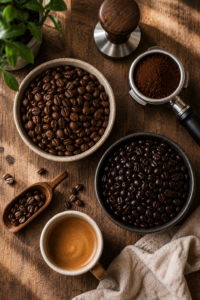
Choosing between arabica vs robusta for espresso ultimately comes down to your personal preferences and brewing goals.
Arabica delivers sweetness, delicate aromas, and complex flavors that appeal to specialty coffee enthusiasts. Robusta provides bold intensity, higher caffeine, and thick crema, making it a favorite in traditional Italian espresso.
Many of the world’s best espresso blends combine both beans to create a balanced cup that offers sweetness, body, and excellent crema.
The best way to decide is to experiment with different bean origins, roast profiles, and blend ratios until you find the espresso that perfectly matches your taste.
For more information about coffee quality, brewing standards, and espresso education, visit the Specialty Coffee Association (SCA).
Related Guides
Continue learning about espresso and coffee beans:
- What Is Espresso? A Beginner’s Guide for Coffee Lovers
- Best Coffee Beans for Espresso: How to Choose the Right Beans
- Espresso Roast vs Dark Roast: 7 Key Differences Every Coffee Lover Should Know
- Single Shot vs Double Espresso: 7 Differences Every Coffee Lover Should Know
- Third Wave Coffee: What It Is and Why It Changed Coffee Forever