
Perfect milk foam can transform an ordinary espresso into a café-quality latte or cappuccino. If you’ve ever wondered how to froth milk for espresso at home, you’re not alone. Many beginners think it requires professional equipment, but with the right technique, anyone can learn.
Whether you use an espresso machine, an electric milk frother, or even a French press, mastering milk frothing is one of the easiest ways to improve your coffee experience.
If you’re still building your home coffee setup, don’t miss our guide to Best Espresso Machines for Beginners (2026) to choose the right machine for your needs.
Why Learning How to Froth Milk for Espresso Is Important
Milk isn’t just an extra ingredient—it plays a major role in the flavor, texture, and appearance of many espresso drinks.
When milk is properly frothed, it creates microfoam, a silky texture made up of tiny bubbles that blend smoothly with espresso instead of sitting on top.
Learning how to froth milk for espresso helps you:
- Make café-style drinks at home
- Improve the texture of lattes and cappuccinos
- Create smoother, sweeter milk
- Practice simple latte art
- Get more from your espresso machine
Even a high-quality espresso shot can taste disappointing if the milk isn’t prepared correctly.
What Is Microfoam?
Microfoam is the smooth, glossy milk used by professional baristas.
Unlike large bubbles that quickly disappear, microfoam consists of tiny, even air bubbles that give milk a creamy texture.
Good microfoam should look like wet paint. It pours smoothly, mixes naturally with espresso, and creates the perfect surface for latte art.
If your milk has large bubbles or separates quickly, it usually means too much air was introduced during frothing.
Best Milk for Frothing
Choosing the right milk makes learning how to froth milk for espresso much easier.
Whole Milk
Whole milk is the best option for beginners because it creates rich, creamy microfoam with excellent stability.
It’s ideal for:
- Lattes
- Flat whites
- Cappuccinos
2% Milk
Reduced-fat milk produces slightly more foam while maintaining a lighter texture.
Many people prefer it if they want a less creamy drink.
Skim Milk
Skim milk creates a large amount of foam, but the texture is often lighter and less silky.
It works well for people who prefer low-fat milk, although it may not produce the same creamy mouthfeel as whole milk.
Plant-Based Milk
Barista-style plant-based milk has improved significantly in recent years.
Popular options include:
- Oat milk
- Soy milk
- Almond milk
- Coconut milk
Among these, barista oat milk is generally considered the easiest dairy-free option for creating smooth microfoam.
Equipment You Can Use
One of the best things about learning how to froth milk for espresso is that you don’t need expensive equipment.
Here are the most common tools:
- Espresso machine with a steam wand
- Electric milk frother
- Handheld milk frother
- French press
- Microwave and whisk
Each method creates slightly different results, but all can produce enjoyable milk foam with the right technique.
How to Froth Milk for Espresso with a Steam Wand
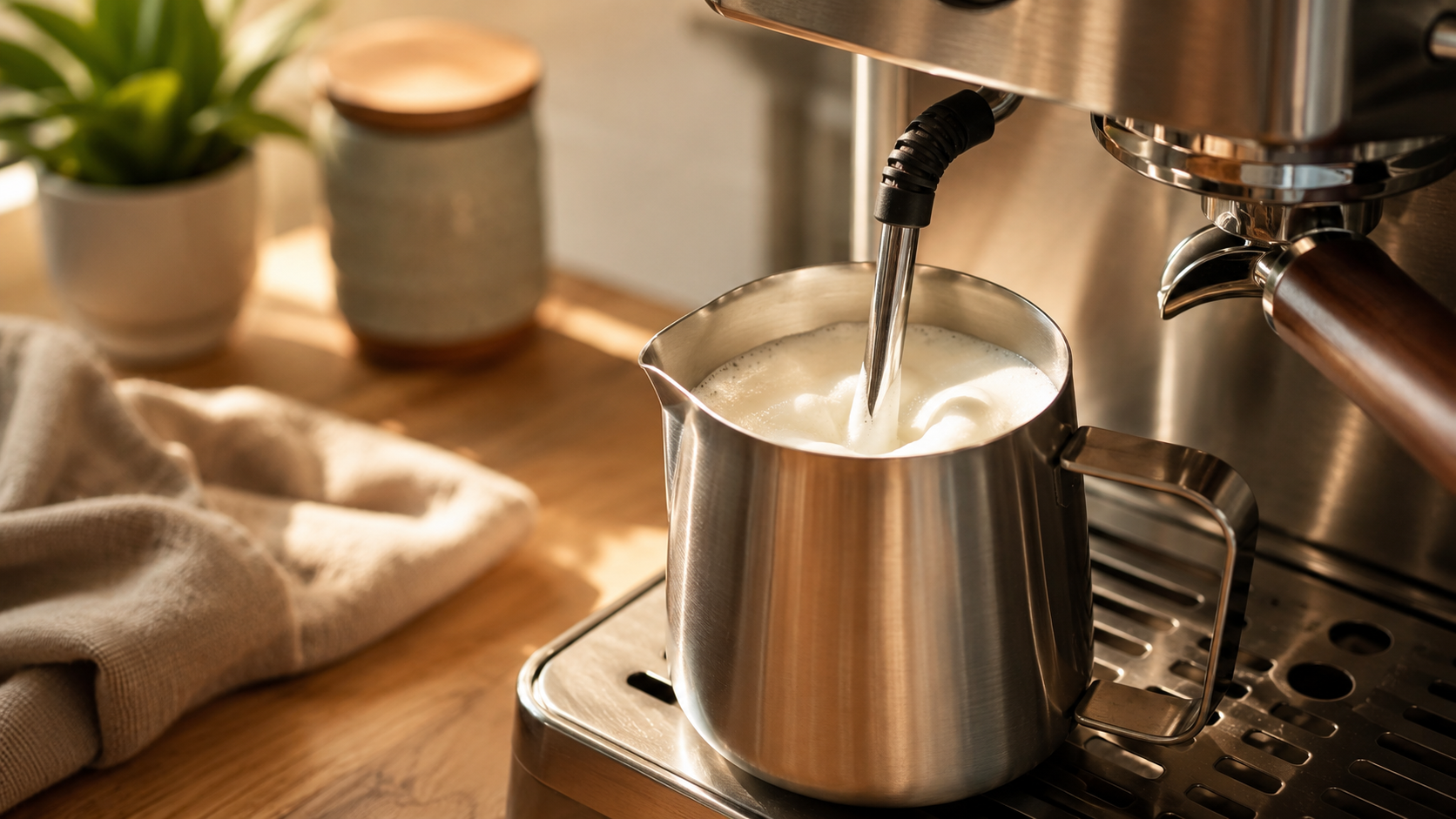
Using a steam wand is the best way to learn how to froth milk for espresso. It creates smooth microfoam that closely matches the quality of drinks served in coffee shops.
Follow these simple steps:
- Fill a cold stainless steel milk pitcher about one-third full with cold milk.
- Purge the steam wand to remove any remaining water.
- Position the steam wand tip just below the surface of the milk.
- Introduce a small amount of air during the first few seconds.
- Lower the pitcher slightly and continue steaming until the milk begins to swirl.
- Heat the milk to approximately 140–150°F (60–65°C).
- Tap the pitcher gently on the counter and swirl the milk to remove any remaining large bubbles.
The finished milk should appear smooth, glossy, and resemble wet paint.
How to Froth Milk with an Electric Milk Frother
An electric milk frother is one of the easiest tools for beginners.
Simply:
- Pour cold milk into the frother.
- Select the desired foam setting.
- Start the machine.
- Pour the milk directly over your espresso.
Although it doesn’t provide as much control as a steam wand, an electric frother consistently produces good results with minimal effort.
How to Froth Milk with a Handheld Frother
Handheld frothers are inexpensive and portable.
For the best results:
- Warm the milk first.
- Place the frother just below the surface.
- Move it up and down slowly.
- Continue frothing for about 20–30 seconds.
This method creates light foam that works well for everyday coffee drinks.
How to Froth Milk Using a French Press
Many people are surprised to learn that a French press can produce excellent milk foam.
Here’s how:
- Heat the milk to about 140°F (60°C).
- Pour it into the French press until it’s about one-third full.
- Pump the plunger up and down quickly for 20–30 seconds.
- Swirl the milk before pouring.
This simple method creates rich foam without any special equipment.
Best Milk Temperature for Espresso Drinks
Milk temperature affects both flavor and texture.
For most espresso drinks, aim for:
- 140–150°F (60–65°C) for lattes and flat whites
- 150–155°F (65–68°C) for cappuccinos
Avoid heating milk above 160°F (71°C).
Overheated milk loses its natural sweetness and can develop a burnt flavor.
Common Milk Frothing Mistakes
Learning how to froth milk for espresso takes practice, and beginners often make a few common mistakes.
Avoid these habits:
- Using warm milk instead of cold milk
- Overheating the milk
- Introducing too much air
- Letting large bubbles remain
- Forgetting to swirl the milk before pouring
- Waiting too long before pouring the milk into the espresso
Small improvements in technique can make a noticeable difference in the quality of your coffee.
Frequently Asked Questions
What is the easiest way to froth milk for espresso?
An electric milk frother is the easiest option for most beginners. It requires very little practice and produces consistent foam for lattes and cappuccinos.
If you want café-quality microfoam and plan to make espresso regularly, a steam wand is the best long-term choice.
Can I froth cold milk?
Yes, but cold foam is typically used for iced coffee drinks rather than hot espresso beverages.
For hot lattes and cappuccinos, always heat the milk while frothing for the best texture and flavor.
Why is my milk full of large bubbles?
Large bubbles usually appear when too much air is introduced at the beginning of the frothing process.
Keep the steam wand just below the milk’s surface and allow the milk to swirl naturally. After steaming, gently tap the pitcher on the counter and swirl the milk to create smooth microfoam.
Which milk is best for latte art?
Whole milk is generally the best choice because its fat and protein balance creates silky microfoam that pours smoothly.
Many baristas also recommend barista-style oat milk as the best plant-based alternative for latte art.

Final Thoughts
Learning how to froth milk for espresso is one of the simplest ways to improve your home coffee experience.
With the right milk, proper temperature, and a little practice, you can create smooth, creamy microfoam that transforms ordinary espresso into café-quality drinks.
Don’t worry if your first few attempts aren’t perfect. Like any coffee skill, milk frothing becomes easier with practice, and small improvements quickly lead to better results.
Whether you’re using a steam wand, an electric frother, or a French press, consistency is more important than expensive equipment.
Related Guides
If you’re building your home coffee setup, these guides may also help:
- Best Espresso Machines for Beginners (2026)
- Espresso Machine Types Explained: Which One Is Right for You?
- How to Clean an Espresso Machine: A Complete Beginner’s Guide
- Best Coffee Beans for Espresso: How to Choose the Right Beans