
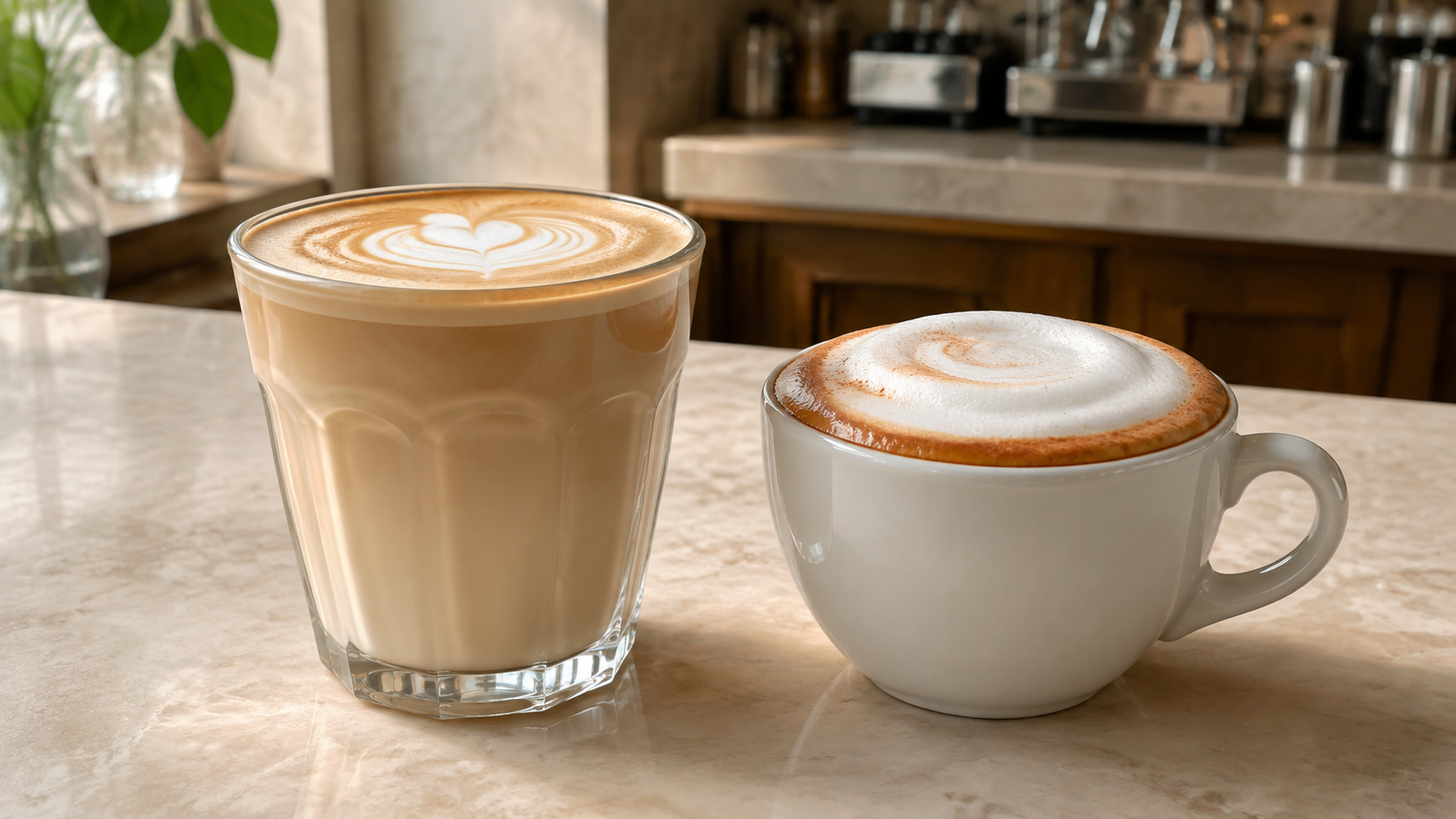
Latte vs cappuccino comes down to more than a layer of foam. Both drinks combine espresso and steamed milk, but their serving size, milk volume, texture, flavor intensity, and drinking experience are noticeably different.
A latte is generally larger and contains more liquid milk, creating a creamy drink with a softer espresso flavor. A cappuccino is usually smaller, uses less milk, and has more aeration, allowing the coffee to taste more pronounced.
Recipes vary among cafés, countries, and baristas, so there is no single ratio used everywhere. The most reliable way to compare these drinks is to look at how they are typically prepared and experienced.
Latte vs Cappuccino at a Glance

| Feature | Latte | Cappuccino |
|---|---|---|
| Main ingredients | Espresso and steamed milk | Espresso, steamed milk, and more aerated foam |
| Typical size | Usually larger | Usually smaller |
| Milk volume | More | Less |
| Foam layer | Thin and silky | Deeper and more aerated |
| Espresso flavor | Softer | More noticeable |
| Mouthfeel | Creamy and smooth | Lighter and foamier |
| Latte art | Common | Possible, depending on foam texture |
| Best suited for | Mild, milk-forward drinks | A more coffee-forward balance |
The drinks may begin with the same espresso dose. Most of the difference is created by the quantity and texture of the milk added afterward.
What Is a Latte?
A latte, short for caffè latte, is an espresso drink made with a relatively generous amount of steamed milk and a thin layer of fine foam.
It is commonly served in a cup or glass larger than the one used for a cappuccino. Because the espresso is diluted by more milk, a latte generally tastes smoother, sweeter, and less intense.
A well-made latte should not feel like plain hot milk with coffee added. The espresso should still be detectable, while the milk contributes sweetness and a silky texture.
Lattes are also well suited to:
- Flavored syrups
- Additional espresso shots
- Iced preparation
- Latte art
- Dairy-free milk
- Slow sipping
Their mild flavor makes them an approachable starting point for people who are new to espresso drinks.
If you want to prepare this drink yourself, follow our step-by-step guide to making a latte at home.
What Is a Cappuccino?
A cappuccino combines espresso with steamed milk that has been aerated to create more foam and volume.
It is usually served in a smaller cup than a latte. With less liquid milk surrounding the espresso, the coffee’s aroma, roast character, acidity, and bitterness remain easier to notice.
Traditional descriptions sometimes present cappuccino as equal parts espresso, steamed milk, and foam. That formula is a useful visual guide, but modern café recipes do not always follow exact thirds.
Many specialty coffee shops serve cappuccino with glossy microfoam rather than a dry cap of stiff bubbles. The finished drink should still have more aeration and a lighter texture than a latte.
1. A Latte Usually Contains More Milk
Milk volume is the most important practical difference.
A latte uses enough steamed milk to create a larger, milk-forward drink. A cappuccino uses less milk relative to its espresso, even when both drinks begin with the same number of shots.
This changes more than the size of the cup. Milk softens espresso’s acidity and bitterness while adding natural sweetness. As the milk volume increases, the coffee flavor becomes gentler.
That is why a latte often tastes mild even when it contains exactly the same espresso dose as a cappuccino.
2. Cappuccino Has More Aeration
Latte milk is fluid and lightly aerated, while cappuccino milk contains more air and creates a fuller foam layer.The difference is not simply “milk versus foam.” Both drinks can contain properly textured microfoam, but the amount of air incorporated into the milk is different.
Latte milk is usually:
- Smooth and fluid
- Lightly aerated
- Glossy rather than bubbly
- Easy to blend with espresso
- Suitable for detailed latte art
Cappuccino milk generally has:
- Greater volume from aeration
- A deeper foam layer
- A lighter mouthfeel
- More separation between the coffee and foam sensations
A modern cappuccino should not resemble espresso buried under dry, spoonable bath bubbles. The foam can be fuller while remaining creamy and cohesive.
Our guide to frothing milk for espresso explains how to control aeration, temperature, and microfoam texture at home.
3. Cappuccino Tastes More Coffee-Forward
A cappuccino does not necessarily contain more espresso. It often tastes stronger because it contains less liquid milk.
In a latte, the larger milk volume spreads the espresso flavor throughout the drink. Sweetness and creaminess become more prominent, particularly when whole milk or barista-style oat milk is used.
In a cappuccino, the smaller serving and lower milk volume allow the espresso to remain at the center of the flavor.
Choose a latte if you want:
- A mellow coffee flavor
- Greater milk sweetness
- A larger drink
- A creamy texture
- Room for flavored syrup
Choose a cappuccino if you want:
- A more noticeable espresso flavor
- A smaller serving
- A lighter, foamier mouthfeel
- Less milk dilution
- A traditional café-style experience
Neither drink is automatically sweeter. Added sugar or syrup can change either one substantially.
4. Serving Sizes Are Different
Serving size varies considerably between cafés, but a latte is normally larger than a cappuccino.
A cappuccino is often served in a cup of approximately 5–6 ounces, although larger versions are common in chain cafés. A latte frequently ranges from 8–12 ounces and may be sold in even larger sizes.
Cup size matters because it affects the balance of the drink. Placing the same espresso shot into progressively larger amounts of milk makes its flavor less concentrated.
When ordering, it can be more useful to ask how many espresso shots are included than to rely on the drink name alone.
5. The Caffeine May Be Exactly the Same
Many people assume cappuccino contains more caffeine because it tastes stronger.
Caffeine primarily depends on the espresso dose, not the amount of foam. If a latte and cappuccino each contain one identical espresso shot, their caffeine content will be similar.
The situation changes when cup sizes use different shot counts. For example, a large latte containing two shots may provide more caffeine than a small cappuccino made with one.
Several variables can affect the final amount:
- Number of espresso shots
- Coffee dose
- Bean variety
- Espresso recipe
- Serving size
- Café preparation standards
The practical rule is simple: check the number of shots rather than judging caffeine by flavor intensity.
For a closer look at the concentrated coffee used in both drinks, read our beginner’s guide to what espresso is.
6. A Latte Is Usually Higher in Calories
Plain espresso contributes very few calories. Most of the energy in either drink comes from milk, sugar, syrup, cream, or toppings.
Because a latte generally contains more milk, it will often contain more calories than a cappuccino prepared with the same espresso and milk type.
However, one universal calorie figure would be misleading. The total changes according to:
- Cup size
- Amount of milk
- Whole, reduced-fat, or skim milk
- Plant-based milk formulation
- Added sugar
- Flavored syrup
- Whipped cream or toppings
A small whole-milk latte may contain fewer calories than an oversized cappuccino with syrup. Compare the actual ingredients and serving sizes if nutrition is important to your decision.
Plant-based milk is not always lower in calories or sugar. Check the product label because formulations differ widely.
7. Latte Art Is Easier in a Latte
Both beverages can support latte art when their milk is textured correctly.
A latte provides more fluid milk and a wider surface, which gives the person pouring more time and space to create hearts, tulips, and rosettas.
A cappuccino’s more aerated milk can make detailed designs harder to pour. Modern cafés may still serve attractive cappuccino art by using glossy microfoam rather than separating the milk into liquid and stiff foam.
Visual appearance does not guarantee good texture. Large visible bubbles usually indicate that too much air was added or that the milk was not incorporated properly.
Does a Cappuccino Always Follow the Rule of Thirds?
The familiar description of one-third espresso, one-third steamed milk, and one-third foam is a convenient way to explain a traditional cappuccino.
It should not be treated as a universal measurement.
Espresso shots are measured differently among cafés, and steamed milk expands when air is introduced. Modern specialty cafés often texture milk as one integrated liquid rather than preparing separate layers with a spoon.
Regional preferences also matter. One café may serve a compact cappuccino with a pronounced foam cap, while another may prepare a similarly sized drink with wetter microfoam.
Despite these variations, a cappuccino should remain smaller and more aerated than a typical latte.
Which Milk Works Best?
Milk influences sweetness, texture, stability, and how clearly the espresso can be tasted.
Whole Milk
Whole milk is a dependable option for both drinks. Its combination of fat, protein, and natural sugar produces a creamy mouthfeel and balanced sweetness.
It is especially forgiving for beginners learning to steam milk.
Reduced-Fat or Skim Milk
Lower-fat dairy milk can create plentiful foam, but the texture may feel less rich. Skim milk often produces a lighter, more rigid foam than whole milk.
It can work well in cappuccino when a light texture is preferred.
Oat Milk
Barista-formulated oat milk is popular because it can produce creamy microfoam and a mild sweetness. Ordinary oat drinks may separate or create unstable bubbles, so products designed for steaming generally perform better.
Soy Milk
Soy milk can foam effectively because of its protein content. It may become unstable when overheated or combined abruptly with acidic espresso, so temperature control is helpful.
Almond Milk
Almond milk varies significantly by brand. Some barista versions steam reasonably well, while thinner products may create coarse bubbles or separate quickly.
No single milk is best for everyone. Flavor preference, dietary needs, and steaming performance should guide the choice.
Which Drink Is Better for Beginners?
A latte is usually easier for someone who finds straight espresso too intense. Its extra milk creates a gentle introduction to espresso-based coffee and pairs easily with vanilla, caramel, or other flavors.
A cappuccino may be the better starting point for someone who wants to understand espresso flavor without drinking a straight shot. The milk softens the coffee, but it does not hide it as much as a larger latte can.
Your best choice depends on what you dislike about other coffee drinks.
If coffee often tastes too bitter, try a latte. If milk drinks seem too diluted, try a cappuccino.
How to Make Both Drinks at Home
You will need freshly brewed espresso and milk textured with a steam wand or capable frothing device.
Basic Latte Method
- Brew one or two espresso shots into a larger cup.
- Steam the milk while introducing only a small amount of air.
- Continue swirling until the milk looks glossy and uniform.
- Pour the milk into the espresso, keeping the texture fluid.
- Finish with a thin layer of microfoam.
Basic Cappuccino Method
- Brew espresso into a smaller cup.
- Introduce more air during the early stage of steaming.
- Continue heating while keeping the milk rotating.
- Swirl the pitcher to combine the milk and foam.
- Pour a smaller milk volume while preserving a deeper foam layer.
Exact quantities should be adjusted to your cup, espresso dose, and preferred balance.
Common Preparation Mistakes
Milk texture usually separates a satisfying drink from a disappointing one.
Avoid these common problems:
- Starting with warm rather than cold milk
- Allowing the steam wand to create large bubbles
- Heating the milk until it tastes cooked
- Failing to swirl the pitcher before pouring
- Leaving steamed milk untouched while the foam separates
- Using so much milk that the espresso disappears
- Making cappuccino foam excessively dry and stiff
- Reusing milk that has already been steamed
- Forgetting to clean and purge the steam wand
For consistent results, prepare the espresso and milk close together and pour shortly after steaming.
Latte vs Cappuccino: Which Should You Order?

Order a latte when you want a larger, creamy drink with a gentle espresso flavor. It also works well when you enjoy syrups, iced coffee, or leisurely sipping.
Order a cappuccino when you want a smaller drink with more aeration and a clearer espresso presence.
A cappuccino is not simply a latte with extra foam, and a latte is not merely an oversized cappuccino. Each drink is designed around a different balance between espresso, liquid milk, air, and serving size.
If you prefer an even smaller milk drink with less foam, compare cortado vs cappuccino before making your choice.
Frequently Asked Questions
Is cappuccino stronger than latte?
It usually tastes stronger because it contains less milk relative to the espresso. It does not necessarily contain more espresso or caffeine.
Which drink contains more milk?
A latte generally contains considerably more liquid milk than a cappuccino.
Do latte and cappuccino use the same espresso?
They can. Both drinks may begin with the same espresso recipe, although cafés may change the number of shots according to cup size.
Is cappuccino sweeter than latte?
Not automatically. A latte may taste naturally sweeter because it contains more milk. Added sugar, syrup, and flavored milk can make either drink sweeter.
Which drink has more foam?
A cappuccino generally contains more aerated milk and a deeper foam layer. A latte uses thinner, more fluid microfoam.
Can you make either drink without an espresso machine?
You can combine concentrated coffee from a moka pot or AeroPress with heated, frothed milk. The result can resemble a latte or cappuccino, although it will not be identical to a drink made with traditional espresso.
Can cappuccino have latte art?
Yes. A cappuccino made with cohesive microfoam can support latte art, although its smaller cup and more aerated texture may limit highly detailed designs.
Is an iced cappuccino the same as an iced latte?
Not usually. An iced latte is commonly made with espresso, cold milk, and ice. “Iced cappuccino” is interpreted differently among cafés and may include cold foam, blended foam, or another house-specific preparation.
Final Thoughts
The most useful latte vs cappuccino distinction is the balance of milk and air.
A latte is generally larger, milkier, smoother, and milder. A cappuccino is normally smaller and more aerated, with an espresso flavor that remains easier to notice.
Recipes vary, so cup size and shot count can sometimes tell you more than the name on the menu. If you are still undecided, order both on different visits and compare the texture rather than judging only by strength.
There is no wrong team here. Latte and cappuccino are close relatives—they merely disagree about how much milk should attend the family gathering.