
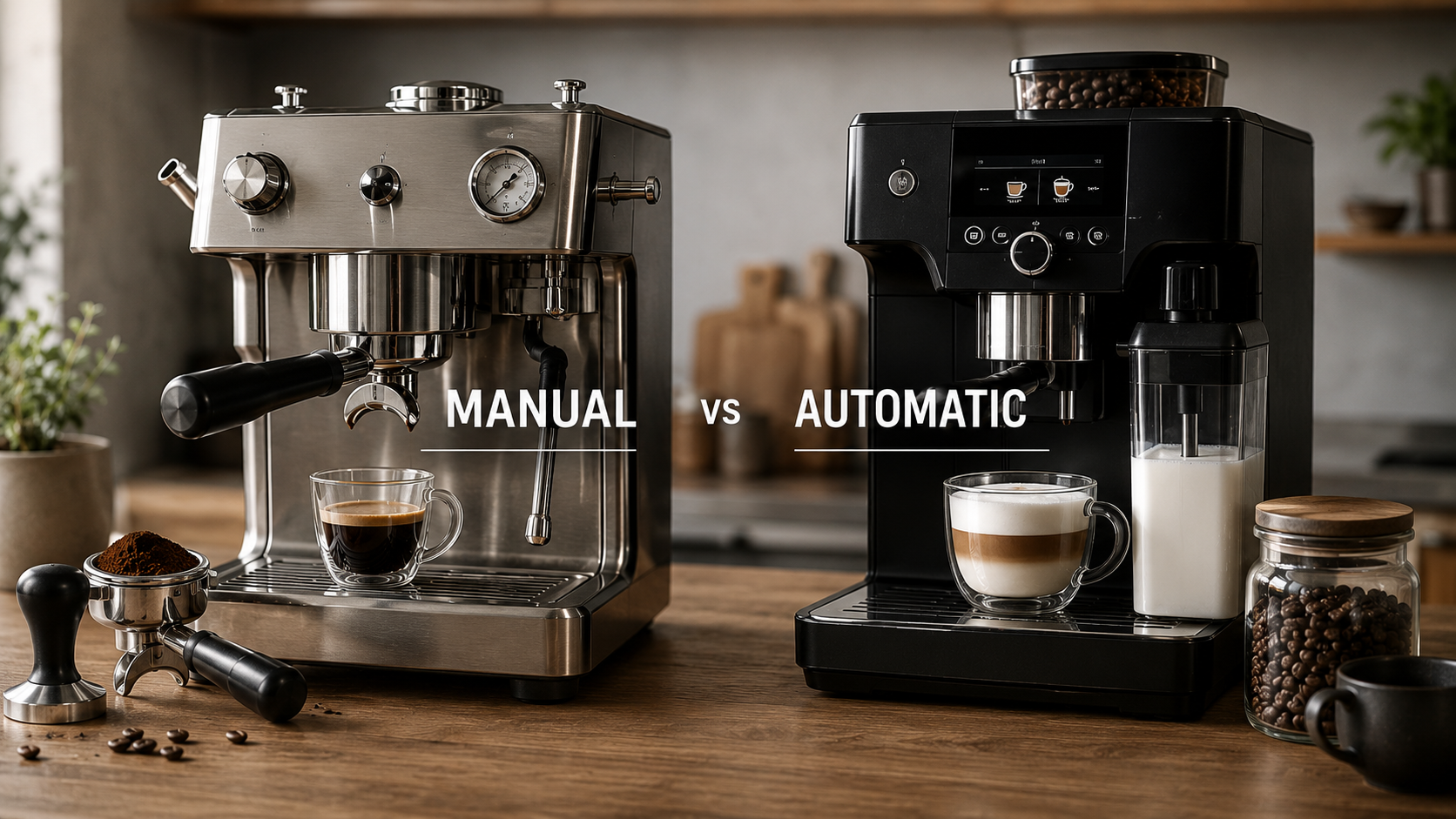
Manual vs automatic espresso machines is one of the first decisions every coffee lover faces when buying an espresso machine. While both types can produce excellent espresso, they offer very different brewing experiences.
A manual espresso machine gives you complete control over grind size, tamping, extraction, and milk steaming. An automatic espresso machine simplifies the process by handling much of the work for you, making it easier to prepare consistent coffee every day.
Understanding the differences between manual vs automatic espresso machines will help you choose the right machine based on your budget, skill level, lifestyle, and coffee preferences.
In this guide, we’ll compare manual and automatic espresso machines by examining ease of use, coffee quality, customization, maintenance, price, and long-term value.
Manual vs Automatic Espresso Machines: What Is a Manual Espresso Machine?
A manual espresso machine (often called a semi-automatic machine) requires the user to control most of the brewing process.
Typical steps include:
- Grinding fresh coffee beans
- Measuring the coffee dose
- Tamping the coffee evenly
- Starting and stopping the extraction
- Steaming milk manually
Because you control every variable, manual machines offer maximum flexibility and allow experienced users to fine-tune every shot.
Many professional cafés use manual espresso machines because they provide excellent control over espresso quality.
Manual vs Automatic Espresso Machines: What Is an Automatic Espresso Machine?
An automatic espresso machine automates much of the brewing process.
Many models can:
- Grind the coffee
- Measure the dose
- Brew espresso
- Steam milk automatically
- Clean themselves after brewing
Some fully automatic machines can prepare espresso, cappuccino, and latte with a single button.
These machines are designed for convenience and consistency, making them ideal for busy households or beginners.
Manual vs Automatic Espresso Machines: Key Differences
| Feature | Manual | Automatic |
|---|---|---|
| Ease of Use | Moderate–Difficult | Very Easy |
| Learning Curve | High | Low |
| Customization | Excellent | Limited |
| Brewing Speed | Slower | Faster |
| Maintenance | Moderate | Moderate–High |
| Price Range | Wide | Usually Higher |
| Best For | Coffee Enthusiasts | Convenience |
The biggest difference between manual vs automatic espresso machines is the balance between control and convenience.
Manual machines reward practice and precision, while automatic machines prioritize speed and consistency.
Manual vs Automatic Espresso Machines: Coffee Quality
Both types can produce outstanding espresso when used correctly.
Manual Machines
Advantages include:
- Greater control over extraction
- Better customization
- Rich café-style espresso
- Improved milk texturing skills
Automatic Machines
Advantages include:
- Consistent espresso
- Minimal effort
- Repeatable results
- Faster workflow
A skilled user with a manual machine can often achieve better espresso, but an automatic machine delivers reliable results with much less effort.
Manual vs Automatic Espresso Machines: Ease of Use
Ease of use is one of the biggest factors when comparing manual vs automatic espresso machines.
Manual Espresso Machines
Using a manual machine requires practice and attention to detail.
You’ll need to:
- Grind coffee beans
- Measure the dose
- Tamp evenly
- Monitor extraction time
- Steam milk manually
While the learning curve is steeper, many coffee enthusiasts enjoy the hands-on experience and the ability to improve their skills over time.
Automatic Espresso Machines
Automatic machines simplify nearly every step.
Most models can:
- Grind fresh beans automatically
- Brew espresso with one touch
- Froth milk automatically
- Save custom drink settings
If convenience is your priority, an automatic machine offers a much easier daily workflow.
Manual vs Automatic Espresso Machines: Cleaning and Maintenance
Every espresso machine requires regular cleaning, but the maintenance process differs.
Manual Machines
Routine maintenance includes:
- Cleaning the portafilter
- Backflushing the group head (if supported)
- Wiping the steam wand after every use
- Emptying the drip tray
- Descaling regularly
Although these tasks take a few minutes, they help maintain excellent espresso quality.
Automatic Machines
Many automatic machines include:
- Automatic rinsing cycles
- Self-cleaning programs
- Descaling reminders
- Milk system cleaning functions
These features reduce daily effort, although replacement filters and cleaning products may increase long-term maintenance costs.
Manual vs Automatic Espresso Machines: Price Comparison
Budget is another important consideration.
General price ranges:
| Machine Type | Typical Price Range |
|---|---|
| Manual Espresso Machine | $250–$2,000+ |
| Automatic Espresso Machine | $600–$3,500+ |
Manual machines often provide excellent espresso at a lower starting price.
Automatic machines usually cost more because they include grinders, electronic controls, programmable settings, and automated milk systems.
When comparing prices, also consider the cost of:
- Burr grinder
- Water filters
- Cleaning supplies
- Replacement parts
Manual vs Automatic Espresso Machines: Which One Should You Choose?
Choosing between manual vs automatic espresso machines depends on your experience and daily routine.
Choose a Manual Espresso Machine if you:
- Enjoy learning new brewing skills
- Want complete control over extraction
- Like experimenting with different coffee beans
- Appreciate café-style espresso
- Don’t mind spending extra time preparing coffee
Choose an Automatic Espresso Machine if you:
- Value convenience
- Make multiple drinks every day
- Prefer one-touch operation
- Have limited time in the morning
- Want consistent results with minimal effort
There is no universally better option—only the one that best matches your lifestyle.
Manual vs Automatic Espresso Machines: Common Buying Mistakes
Many first-time buyers focus only on the machine itself.
Instead, avoid these common mistakes:
- Buying without considering your budget for a grinder
- Ignoring long-term maintenance costs
- Choosing features you’ll never use
- Forgetting about countertop space
- Overlooking warranty and customer support
- Purchasing based only on appearance
Taking the time to evaluate your brewing habits will help you make a smarter long-term investment.
Manual vs Automatic Espresso Machines: Features Worth Looking For
Whether you choose a manual or automatic model, several features can significantly improve your coffee experience.
Recommended features include:
- PID temperature control
- Stable brewing pressure
- Stainless steel steam wand
- Fast heat-up time
- Adjustable pre-infusion
- Built-in pressure gauge
- Easy access for cleaning
These features contribute to more consistent espresso extraction and better overall usability.
Manual vs Automatic Espresso Machines: Is It Worth the Investment?
A quality espresso machine can last for many years with proper care.
While automatic machines offer exceptional convenience, manual machines often provide greater control and room for skill development.
If making espresso is part of your daily routine, investing in the right machine can improve both the quality of your coffee and your overall brewing experience.
Manual vs Automatic Espresso Machines Frequently Asked Questions
Are manual espresso machines better than automatic machines?
Not necessarily.
Manual espresso machines offer greater control over extraction and allow experienced users to fine-tune every shot. Automatic machines, however, provide convenience, consistency, and faster preparation, making them an excellent choice for everyday use.
Which type of espresso machine is best for beginners?
Most beginners find automatic espresso machines easier to use because they automate grinding, brewing, and sometimes milk frothing.
However, entry-level manual machines are a great option for those who want to develop barista skills and learn the fundamentals of espresso making.
Do automatic espresso machines make good coffee?
Yes.
Modern automatic espresso machines can produce excellent espresso, especially when paired with fresh, high-quality coffee beans. While they offer fewer customization options than manual machines, they deliver reliable and consistent results.
Do I need a separate grinder with a manual espresso machine?
In most cases, yes.
A quality burr grinder is essential for manual espresso machines because grind size has a major impact on extraction quality. Investing in a good grinder is just as important as choosing the espresso machine itself.
Final Thoughts
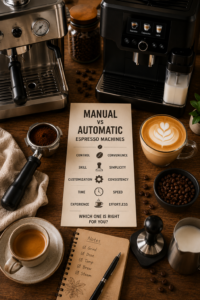
Choosing between manual vs automatic espresso machines ultimately depends on how you enjoy making coffee.
If you value precision, experimentation, and complete control, a manual espresso machine offers an engaging brewing experience and the potential for café-quality espresso.
If convenience, speed, and consistency are your priorities, an automatic espresso machine can deliver excellent coffee with minimal effort.
Whichever option you choose, pairing your machine with freshly roasted beans, a quality grinder, and regular maintenance will help you enjoy better espresso every day.
For more information about espresso brewing standards, coffee quality, and barista education, visit the Specialty Coffee Association (SCA).
Related Guides
Continue exploring espresso equipment and brewing techniques: