
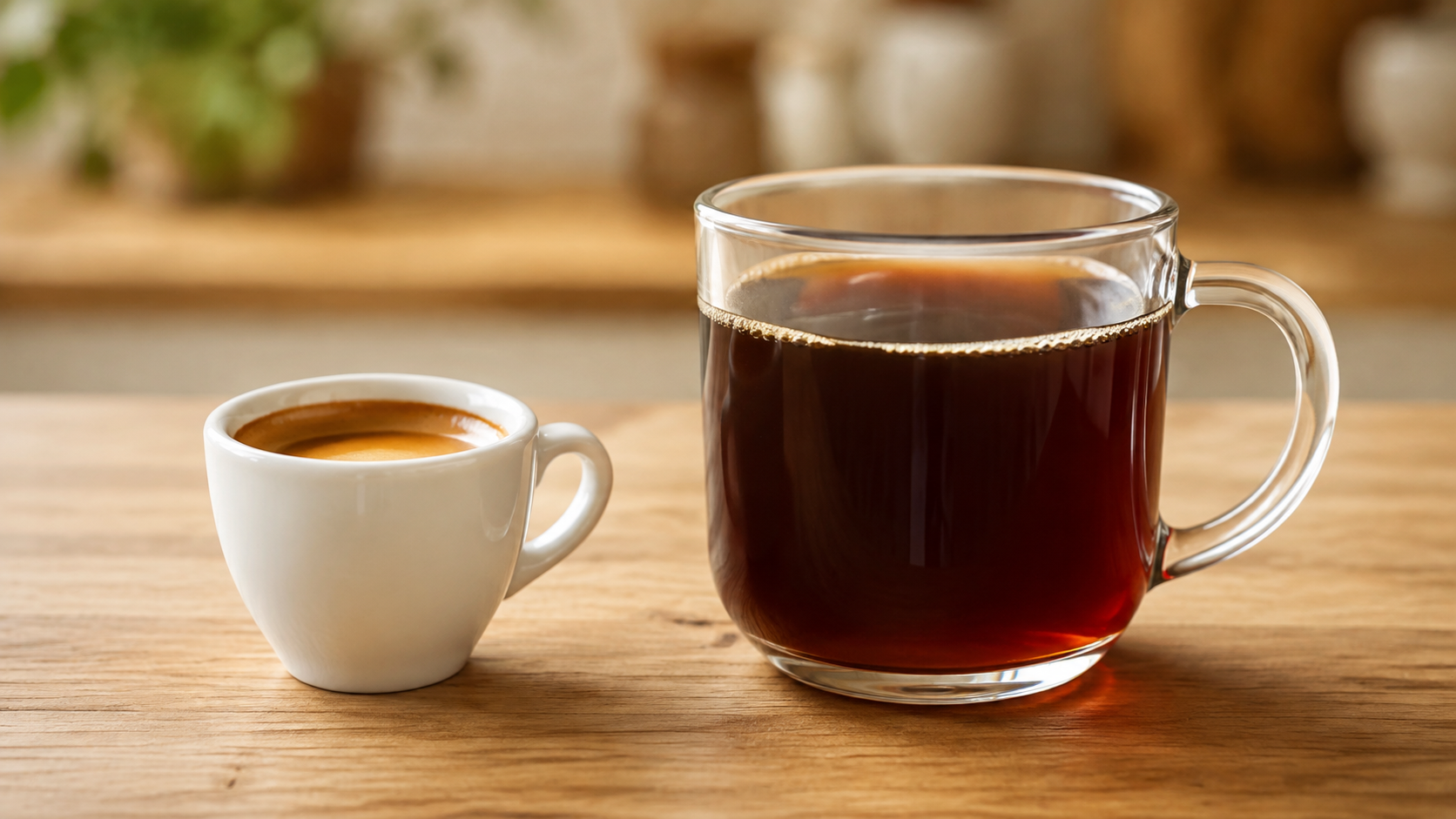
Espresso vs coffee is not really a contest between two different ingredients. Espresso is coffee, but it is prepared using a brewing method that creates a smaller, more concentrated drink.
In this comparison, “regular coffee” refers mainly to drip-brewed coffee. Both drinks can use the same beans, but pressure, grind size, brewing time, serving size, texture, and caffeine concentration create noticeably different results.
Here is a quick overview before we examine each difference in detail.
| Feature | Espresso | Drip coffee |
|---|---|---|
| Brewing method | Pressurized extraction | Gravity filtration |
| Typical grind | Fine | Medium |
| Brewing time | About 25–30 seconds | Usually several minutes |
| Serving size | About 1–2 ounces | Commonly 8–12 ounces |
| Texture | Concentrated and full-bodied | Lighter and more fluid |
| Crema | Usually present | Not present |
| Caffeine per ounce | Higher | Lower |
| Total caffeine per serving | Often lower | Often higher |
| Equipment | Espresso machine and capable grinder | Drip brewer or pour-over equipment |
| Best suited for | Short shots and milk drinks | Larger cups and slow sipping |
Espresso and Coffee Use the Same Beans
One of the most common misconceptions is that espresso requires a special type of coffee bean.
It does not. Espresso and drip coffee may both be made with arabica, robusta, blends, or single-origin beans. The main difference is the brewing process rather than the bean itself.
If you are unsure which roast or flavor profile to use, our guide to the best coffee beans for espresso explains the main options.
Packages labeled “espresso roast” usually contain coffee that the roaster believes will work well with espresso preparation. According to the National Coffee Association, espresso roast is not one standardized roast level.
Medium and dark roasts are popular for traditional espresso because they often produce chocolate, caramel, and nutty flavors. Lighter roasts can also make excellent espresso, although they may require more careful adjustments.
Drip coffee works with the same range of roast levels. The best choice depends on the flavors you enjoy rather than a strict rule about which beans belong in each brewer.
The Brewing Method Is the Biggest Difference
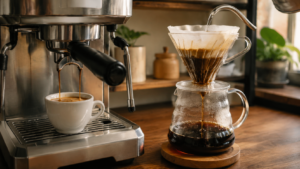
Drip coffee relies mainly on gravity. Hot water passes through ground coffee and a filter before flowing into a carafe or cup.
Espresso machines create pressure that pushes water through a compact bed of finely ground coffee. This pressure allows the brewer to produce a concentrated beverage in a short period.
A modern espresso recipe commonly uses:
-
An 18–20 gram coffee dose
-
Approximately 36–40 grams of finished espresso
-
A brew ratio close to 1:2
-
Water near 93°C or 200°F
-
About 9 bars of pressure
-
An extraction time near 25–30 seconds
These figures are starting points rather than universal requirements. The Specialty Coffee Association notes that recipes vary according to the coffee, equipment, and desired flavor.
Drip coffee takes longer because water moves more gradually through a larger bed of coarser grounds. The exact brewing time depends on whether you use an automatic machine, pour-over brewer, or another gravity-based method.
For a deeper explanation of pressure, brew ratios, crema, and extraction, read our beginner’s guide to what espresso is.
Espresso Is More Concentrated
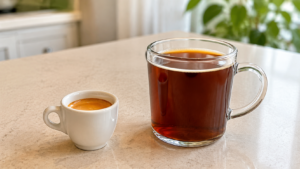
Espresso contains more dissolved coffee material in a much smaller amount of water. That concentration creates its intense flavor and fuller texture.
Drip coffee has a higher proportion of water to coffee in the finished drink. It is usually lighter and easier to sip over a longer period.
“Stronger” can mean several different things:
-
More intense flavor
-
Higher concentration
-
More caffeine
-
A darker roast
-
Greater bitterness
Espresso is generally stronger in flavor and concentration per ounce. That does not automatically mean one espresso contains more total caffeine than a full cup of drip coffee.
Caffeine: Concentration Versus Total Serving
Espresso has more caffeine per ounce, while a regular cup of brewed coffee often contains more caffeine overall.
According to the National Coffee Association, one ounce of espresso typically contains approximately 63 mg of caffeine. Brewed coffee contains roughly 12–16 mg per ounce.
The difference changes when serving size is considered:
| Beverage | Example serving | Approximate caffeine pattern |
|---|---|---|
| Single espresso | 1 ounce | About 63 mg |
| Double espresso | 2 ounces | Usually more than a single shot |
| Brewed coffee | 8 ounces | Often more total caffeine than one shot |
| Large brewed coffee | 12 ounces | Can contain substantially more total caffeine |
Actual caffeine content varies with bean variety, dose, serving size, recipe, and extraction.
The practical answer is simple: espresso is more caffeinated by volume, but a mug of drip coffee will commonly provide more total caffeine than a single espresso.
Taste and Aroma
Espresso magnifies the characteristics of the coffee. A small adjustment to grind size or extraction can noticeably change the result.
A balanced espresso may taste:
-
Sweet and syrupy
-
Chocolatey or nutty
-
Fruity or floral
-
Bright but pleasant
-
Gently bitter with a lasting finish
Poorly extracted espresso may taste sharply sour, hollow, harsh, or dry.
Drip coffee generally presents flavors in a more diluted and gradual way. It may make delicate aromas and individual flavor notes easier to identify, especially with lightly roasted specialty coffee.
Neither method has a universally better flavor. Espresso emphasizes concentration and texture, while drip brewing often emphasizes clarity and drinkability.
Texture and Crema
Texture is one of the easiest differences to notice.
Espresso may feel creamy, dense, or syrupy because pressurized brewing extracts and disperses oils, gases, and soluble compounds into a small beverage.
It also commonly develops crema—the golden-brown foam on top of a freshly extracted shot. Crema forms partly from carbon dioxide released during pressurized brewing.
Crema can offer clues about freshness and extraction, but a thick layer does not guarantee good flavor.
Paper-filtered drip coffee has a cleaner and lighter mouthfeel because the filter captures many oils and fine particles. Metal-filtered coffee may feel heavier, but it still does not have the same concentrated texture as espresso.
Grind Size and Grinder Requirements
Espresso normally requires a fine grind. The grounds must create enough resistance for the machine to build pressure and control water flow.
Small grind adjustments can have a major effect:
-
Too coarse: the shot may run quickly and taste sour or thin
-
Too fine: the shot may flow slowly and taste bitter or dry
-
Uneven grind: water may form channels and extract the coffee inconsistently
Drip coffee generally uses a medium grind, although the correct setting depends on the brewer and filter.
Espresso also demands a grinder capable of making very small, repeatable adjustments. A basic grinder may work adequately for drip coffee but lack the precision needed for consistent espresso.
Before choosing a grinder, compare blade and burr grinders to understand why grind consistency matters for both brewing methods.
Serving Size and Drinking Experience
A single espresso is normally served in a small cup and consumed relatively soon after preparation. Its aroma, temperature, crema, and texture change quickly.
Drip coffee is served in a larger mug and is better suited to slow sipping. It can accompany breakfast, work, reading, or conversation without disappearing in three determined sips.
Espresso can also become the foundation of a larger beverage:
-
Americano: espresso and hot water
-
Latte: espresso and steamed milk
-
Cappuccino: espresso, steamed milk, and foam
-
Macchiato: espresso with a small amount of milk or foam
-
Mocha: espresso, chocolate, and milk
-
Flat white: espresso with steamed milk and fine microfoam
This versatility is one reason espresso machines are central to café menus.
Equipment and Cost
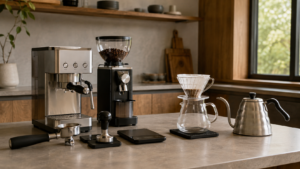
Drip coffee is generally easier and less expensive to prepare at home.
A simple setup may require:
-
A drip machine or pour-over brewer
-
Paper or reusable filters
-
A kettle, depending on the brewer
-
A basic burr grinder
-
A scale
Home espresso usually requires:
-
An espresso machine
-
An espresso-capable burr grinder
-
A correctly sized tamper
-
A digital scale
-
Cleaning accessories
-
More time for practice and adjustment
Espresso machines also require regular cleaning and maintenance. Milk-based drinks add steam-wand cleaning to the routine.
If you are ready to build a home setup, our guide to the best espresso machines for beginners can help you compare suitable machine types.
For someone who wants convenient large cups, drip brewing offers excellent value. Espresso equipment makes more sense for people who enjoy concentrated shots, café-style milk drinks, and the process of adjusting recipes.
Which Method Is Easier for Beginners?
Drip coffee is usually more forgiving.
You still need a reasonable coffee-to-water ratio and suitable grind, but small preparation differences are less likely to ruin the entire cup.
Espresso has a steeper learning curve because several variables interact:
-
Coffee dose
-
Grind size
-
Distribution
-
Tamping
-
Water temperature
-
Beverage yield
-
Extraction time
Home espresso becomes more manageable when you weigh the coffee and finished beverage, follow a consistent routine, and change only one variable at a time.
Convenience is also relative. An automatic drip machine can prepare several cups at once, while a capsule or fully automatic espresso machine may produce one drink very quickly.
Is Espresso More Bitter Than Coffee?
Espresso is not supposed to be bitter simply because it is espresso.
Its concentration can make bitterness feel more noticeable, particularly with dark-roasted beans. Excessive extraction, overly hot water, or an unsuitable grind may also produce a harsh or dry taste.
Drip coffee can become bitter for similar reasons, including:
-
Grinding too finely
-
Brewing for too long
-
Using too much coffee
-
Leaving brewed coffee on a hot plate
-
Choosing a roast darker than you enjoy
Well-prepared espresso should balance sweetness, acidity, and bitterness. Drip coffee should also taste balanced, even though its texture and intensity differ.
Can You Make Espresso with a Regular Coffee Maker?
A regular drip coffee maker cannot produce traditional espresso because it does not generate the same pressure or concentrated brew ratio.
Adding extra grounds may create stronger drip coffee, but it does not turn the beverage into espresso.
Moka pots and AeroPress brewers can produce concentrated coffee suitable for milk drinks. However, the result is more accurately described as espresso-style coffee because these devices do not operate like conventional espresso machines.
Which Is Better for Milk Drinks?
Espresso is usually the better foundation for lattes, cappuccinos, and similar beverages.
Its concentration allows the coffee flavor to remain noticeable after milk is added. A normal-strength drip coffee may become difficult to taste when combined with a large amount of milk.
Strong drip coffee can still be used for homemade milk drinks, particularly when an espresso machine is unavailable. The flavor and texture will simply differ from the café-style version.
Espresso vs Coffee: Which Should You Choose?
Choose espresso if you prefer:
-
Intense, concentrated flavor
-
Small servings
-
Thick texture
-
Lattes and cappuccinos
-
Experimenting with brewing variables
-
A hands-on preparation process
Choose drip coffee if you prefer:
-
Larger servings
-
A lighter mouthfeel
-
Slow sipping
-
Easier preparation
-
Brewing several cups together
-
Lower equipment costs
You do not have to choose only one. Many coffee drinkers enjoy espresso for a quick, concentrated drink and drip coffee when they want a larger cup.
Frequently Asked Questions
Is espresso coffee?
Yes. Espresso is coffee prepared with a pressurized brewing method. It is not a separate bean variety.
Does espresso always have more caffeine?
No. Espresso has more caffeine per ounce, but an entire mug of drip coffee often contains more total caffeine than one espresso shot.
Can the same beans be used for espresso and drip coffee?
Yes. The same beans can be used for both methods, although the ideal grind size and recipe will be different.
Is espresso healthier than drip coffee?
Neither method is automatically healthier for everyone. Serving size, additions such as sugar or cream, caffeine sensitivity, and individual health needs matter more than the drink’s name.
Why does espresso have crema but drip coffee does not?
Pressurized extraction releases carbon dioxide and disperses oils and compounds that form foam on the espresso’s surface. Gravity-brewed coffee does not reproduce the same conditions.
Is an Americano the same as drip coffee?
No. An Americano is espresso diluted with hot water. It may have a similar serving size to drip coffee, but the brewing process, aroma, texture, and flavor remain different.
Final Thoughts
The central difference between espresso and coffee is not the bean. It is how the coffee is brewed and how concentrated the finished beverage becomes.
Espresso uses pressure, a fine grind, and a short extraction to create a small drink with concentrated flavor and a fuller texture. Drip coffee relies on gravity and produces a larger, lighter beverage designed for longer sipping.
Espresso is the better match for concentrated shots and milk-based café drinks. Drip coffee is usually more practical for simple brewing, larger servings, and multiple cups.
Neither one wins the contest outright. The best method is the one that fits your taste, budget, equipment, and daily routine.