

Making a café-quality latte doesn’t have to be difficult. If you’re wondering how to make a latte at home, you’ll be happy to know that you only need a few basic tools, fresh ingredients, and the right technique.
A homemade latte combines rich espresso with silky steamed milk to create one of the world’s most popular coffee drinks. Whether you’re using an espresso machine or just starting your home coffee journey, this guide will walk you through every step.
Before learning how to make a latte, it’s helpful to understand how to create smooth microfoam. If you haven’t already, check out our guide on How to Froth Milk for Espresso at Home to master the most important skill for making a great latte.
How to Make a Latte at Home: What You’ll Need
Before you begin, gather the following equipment and ingredients.
Essential Equipment
- Espresso machine
- Steam wand or milk frother
- Stainless steel milk pitcher
- Coffee grinder (recommended)
- Latte cup (8–12 oz)
Ingredients
- Fresh espresso beans
- Cold whole milk (or barista-style oat milk)
- Filtered water
Using freshly roasted coffee beans and cold milk will help you achieve the best flavor and texture.
How to Make a Latte at Home: Step 1 – Brew a Fresh Espresso Shot
A great latte always starts with great espresso.
Grind fresh coffee beans just before brewing and prepare one or two shots of espresso, depending on your preferred strength.
A properly extracted espresso should have:
- Rich golden crema
- Balanced sweetness
- Smooth body
- Pleasant aroma
If you’re new to espresso, our What Is Espresso? A Beginner’s Guide for Coffee Lovers explains everything you need to know before making milk-based coffee drinks.
How to Make a Latte at Home: Step 2 – Steam the Milk
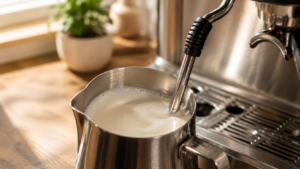
Steaming milk correctly is what transforms espresso into a smooth and creamy latte.
Pour cold milk into a stainless steel milk pitcher until it is about one-third full.
Place the steam wand just below the milk’s surface and introduce a small amount of air during the first few seconds. Once the milk begins to expand, lower the pitcher slightly and allow the milk to spin in a gentle whirlpool.
For the best results:
- Steam milk to 140–150°F (60–65°C)
- Create silky microfoam instead of large bubbles
- Swirl the milk after steaming
- Tap the pitcher lightly to remove any remaining air bubbles
The finished milk should have a glossy appearance that resembles wet paint.
Why Microfoam Matters
One of the biggest differences between an average homemade latte and one served in a specialty coffee shop is microfoam.
Microfoam blends naturally with espresso, creating a creamy texture that enhances sweetness while reducing bitterness.
Good microfoam also allows you to practice simple latte art as your pouring technique improves.
If you’re still working on your milk-steaming skills, don’t worry. Like espresso extraction, creating consistent microfoam becomes much easier with regular practice.
How to Make a Latte at Home: Step 3 – Pour the Steamed Milk
Now it’s time to combine the espresso and steamed milk.
Begin by swirling both the espresso and the milk. This helps keep the crema and microfoam smooth before pouring.
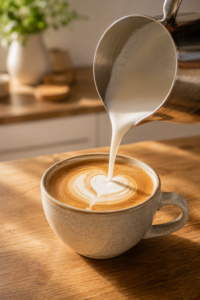
Slowly pour the steamed milk into the center of the espresso. As the cup fills, bring the pitcher closer to the surface and increase your pouring speed slightly.
Even if you’re not ready for latte art, focus on creating a smooth, even layer of microfoam.
With practice, you’ll naturally improve your pouring technique.
How to Make a Latte at Home: Step 4 – Practice Simple Latte Art
Latte art isn’t required, but it makes every homemade latte more enjoyable.
Start with simple designs such as:
- Heart
- Tulip
- Rosetta
The key is pouring silky microfoam instead of thick foam.
If your milk is too bubbly or too stiff, the design won’t form properly.
Don’t worry if your first attempts aren’t perfect. Every skilled barista started exactly the same way.
How to Make a Latte at Home: Step 5 – Choose the Right Milk
The type of milk you use affects both flavor and texture.
Whole Milk
Whole milk is the easiest option for beginners.
It creates rich, creamy microfoam and produces the classic café-style latte.
Oat Milk
Barista-style oat milk is one of the best dairy-free alternatives.
It froths well and has a naturally smooth texture that pairs beautifully with espresso.
Soy Milk
Soy milk creates stable foam and is another excellent plant-based choice for homemade lattes.
How to Make a Latte at Home: Step 6 – Avoid These Common Mistakes
Even with good equipment, small mistakes can affect the final result.
Avoid these common problems:
- Overheating the milk above 160°F (71°C)
- Using old coffee beans
- Grinding coffee too far in advance
- Creating large bubbles instead of microfoam
- Pouring the milk too slowly
- Using low-quality water
Small improvements in technique often make a much bigger difference than buying expensive equipment.
How to Make a Latte at Home: Step 7 – Customize Your Latte
One of the best things about making coffee at home is the ability to personalize every cup.
Try adding:
- Vanilla syrup
- Caramel syrup
- Cinnamon
- Cocoa powder
- Honey
- Brown sugar
You can also experiment with different espresso roasts and milk varieties to discover your favorite combination.
Best Coffee Beans for Homemade Lattes
Fresh beans play a major role in the quality of your latte.
Medium and medium-dark espresso roasts are usually the easiest to work with because they provide a balanced sweetness that complements steamed milk.
If you’re unsure which beans to buy, our guide to Best Coffee Beans for Espresso: How to Choose the Right Beans can help you find the perfect match for your home coffee setup.
Can You Make a Latte Without an Espresso Machine?
Yes.
Although an espresso machine produces the most authentic results, you can still enjoy a homemade latte using other brewing methods.
Popular alternatives include:
- Moka Pot
- AeroPress
- French Press
- Strong coffee concentrate
Simply prepare a concentrated coffee base and combine it with properly frothed milk.
The flavor won’t be identical to traditional espresso, but it can still produce a delicious homemade latte.
Best Espresso Machines for Beginners (2026)
Frequently Asked Questions About How to Make a Latte at Home
Can I make a latte at home without an espresso machine?
Yes. While an espresso machine delivers the most authentic results, you can make a delicious homemade latte using a Moka Pot, AeroPress, or another concentrated coffee brewing method. Pair it with properly frothed milk for the best flavor.
What is the best milk for making a latte at home?
Whole milk is the easiest option because it creates smooth, silky microfoam.
If you prefer dairy-free alternatives, barista-style oat milk is one of the best choices thanks to its creamy texture and excellent frothing performance.
What temperature should milk be for a latte?
For the best flavor and texture, steam milk to 140–150°F (60–65°C).
Heating milk above 160°F (71°C) can reduce its natural sweetness and create a burnt taste.
Why isn’t my homemade latte creamy?
The most common reasons include:
- Overheating the milk
- Creating large bubbles instead of microfoam
- Using stale coffee beans
- Pouring the milk too slowly
- Poor espresso extraction
Small adjustments to your technique can dramatically improve your results.
Final Thoughts on How to Make a Latte at Home
Learning how to make a latte at home is one of the most rewarding skills for any coffee enthusiast.
With freshly brewed espresso, properly steamed milk, and a little patience, you can enjoy café-quality lattes without leaving your kitchen.
Don’t focus on perfection during your first few attempts. Every great home barista improves through consistent practice.
As your skills grow, you’ll gain confidence experimenting with latte art, different coffee beans, and new espresso recipes.
For more information about specialty coffee standards and coffee education, visit the Specialty Coffee Association (SCA).
Latte vs Cappuccino: 7 Key Differences Every Coffee Lover Should Know
Related Guides
Continue improving your home coffee skills with these guides: