
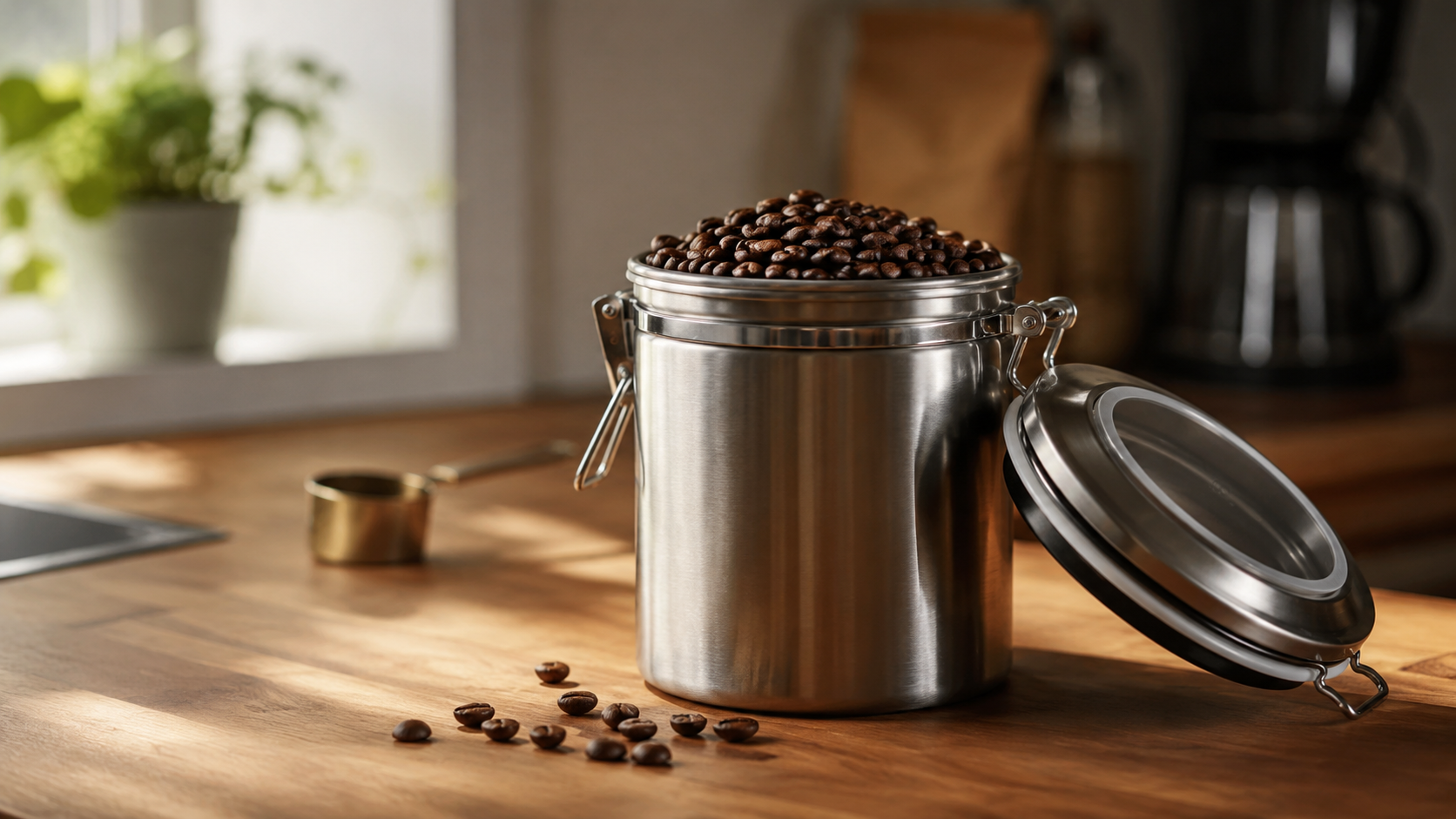
Nothing is more disappointing than brewing coffee that tastes flat only a few days after opening a fresh bag. Many coffee lovers assume their beans have gone bad, but in reality, improper storage is often the biggest reason for flavor loss.
Fresh coffee beans are delicate. Once roasted, they slowly begin to lose the aromatic compounds that create their rich flavors. Exposure to air, moisture, heat, and light speeds up this process dramatically.
Fortunately, keeping coffee fresh isn’t complicated. With a few simple storage habits, you can enjoy better-tasting coffee for much longer.
In this guide, you’ll learn exactly how to store coffee beans properly, which containers work best, where to keep them, and the common mistakes that shorten their freshness.
Before learning how to store coffee beans, it’s helpful to understand what espresso is and why freshly roasted beans make such a difference in every cup.
Why Coffee Beans Lose Freshness
Coffee beans may look dry and stable, but they’re constantly changing after roasting.
During roasting, beans develop hundreds of volatile aromatic compounds responsible for flavors such as chocolate, caramel, berries, nuts, and floral notes. These compounds slowly disappear when exposed to oxygen.
Several factors contribute to stale coffee:
- Oxygen causes oxidation, reducing aroma and sweetness.
- Moisture introduces unwanted flavors and can damage the beans.
- Heat accelerates chemical breakdown.
- Sunlight breaks down delicate flavor compounds.
Even high-quality specialty coffee can taste dull if stored incorrectly.
Of course, proper storage is only part of the equation. Starting with high-quality beans is equally important. Read our guide to choosing the best coffee beans for espresso.
The Four Biggest Enemies of Fresh Coffee
1. Air
Oxygen is the primary cause of stale coffee.
Every time you open your coffee bag, fresh oxygen enters and begins reacting with the oils and aromatic compounds inside the beans.
This doesn’t mean you should never open your coffee. Instead, minimize unnecessary exposure by keeping the container sealed whenever possible.
2. Moisture
Coffee beans absorb moisture surprisingly quickly.
Humidity can alter flavor, reduce consistency during brewing, and in extreme cases even encourage mold growth.
Never store coffee near a kettle, dishwasher, sink, or other humid areas of your kitchen.
3. Heat
Warm temperatures speed up oxidation.
A cabinet beside the oven may seem convenient, but constant heat will shorten the life of your coffee significantly.
Choose a cool, stable location instead.
4. Light
Direct sunlight and bright kitchen lighting slowly degrade coffee oils.
Opaque containers provide better protection than clear glass jars displayed on the countertop.
Even if a transparent container looks attractive, it isn’t always the best choice for preserving flavor.
Why the Original Coffee Bag Isn’t Always Enough
Many specialty coffee bags include one-way degassing valves that allow carbon dioxide to escape without letting oxygen enter.
These bags work well for short-term storage, especially if they include a reliable zipper seal.
However, after repeated opening and closing, more air enters the bag each day. If you buy larger quantities of coffee, transferring the beans into an airtight container can help maintain freshness for longer.
The Best Containers for Coffee Storage
The container you choose can make a noticeable difference in how long your coffee stays fresh.
The ideal coffee container should be:
- Airtight
- Opaque (blocks light)
- Easy to seal tightly
- Made from food-safe materials
Many coffee enthusiasts prefer stainless steel canisters because they protect beans from both light and air. Ceramic containers with tight-fitting lids are also excellent choices.
If you purchase coffee in small quantities and finish it within two weeks, the original resealable bag is often sufficient—provided you press out as much air as possible before sealing it.
Avoid decorative glass jars unless they’re stored inside a dark cabinet.
Should You Store Coffee Beans in the Refrigerator?
Many people believe the refrigerator keeps coffee fresh, but this is one of the most common coffee storage myths.
Coffee beans are highly porous and easily absorb surrounding odors.
Strong-smelling foods like onions, garlic, cheese, and leftovers can subtly affect the aroma of your coffee.
In addition, refrigerators experience frequent temperature and humidity changes whenever the door is opened, creating condensation that can damage coffee quality.
For daily use, storing coffee at room temperature is almost always the better choice.
Is Freezing Coffee Beans Ever a Good Idea?
Freezing coffee beans can work—but only under the right conditions.
If you’ve purchased several bags of specialty coffee that you won’t use for weeks, freezing unopened bags is a practical way to preserve freshness.
For the best results:
- Freeze only whole beans.
- Divide large quantities into smaller portions.
- Use airtight, freezer-safe packaging.
- Thaw each portion completely before opening it.
- Never refreeze coffee after it has thawed.
For coffee you use every day, freezing usually isn’t necessary.
How Long Do Coffee Beans Stay Fresh?
Freshness depends on roast date, storage conditions, and whether the beans remain whole or have been ground.
As a general guideline:
| Coffee Type | Best Flavor Period |
|---|---|
| Whole beans | 2–6 weeks after opening |
| Ground coffee | 1–2 weeks after opening |
| Unopened specialty coffee | Several months when stored properly |
Rather than focusing only on expiration dates, pay attention to the roast date whenever possible.
Recently roasted coffee typically delivers the most vibrant flavor.
Signs Your Coffee Has Gone Stale
Coffee rarely becomes unsafe to drink simply because it’s old.
Instead, it gradually loses the characteristics that make it enjoyable.
Common signs include:
- Weak aroma after grinding
- Flat or dull flavor
- Reduced sweetness
- Less complexity in the cup
- Thin or short-lived espresso crema
If your coffee suddenly tastes lifeless, improper storage is often the first thing to investigate before blaming your brewing method or equipment.
Simple Tips to Keep Coffee Fresh Every Day
Keeping your coffee fresh doesn’t require expensive equipment or complicated routines. A few simple habits can make a significant difference.
Here are some easy practices to follow:
- Buy coffee in smaller quantities that you can finish within a few weeks.
- Keep beans in an airtight, opaque container.
- Store the container in a cool, dry cabinet away from sunlight.
- Grind only the amount you need just before brewing.
- Avoid opening the container more often than necessary.
- Check the roast date instead of relying only on the expiration date.
These small changes help preserve the rich aroma and flavor that make freshly roasted coffee so enjoyable.
Common Coffee Storage Mistakes
Even experienced coffee drinkers sometimes make storage mistakes without realizing it.
Some of the most common include:
Leaving Coffee in Direct Sunlight
A beautiful glass jar on the kitchen counter may look appealing, but sunlight gradually breaks down the delicate oils that contribute to coffee’s flavor.
Storing Coffee Beside the Stove
Heat from cooking appliances accelerates oxidation and shortens freshness.
Keeping Coffee in the Refrigerator
While it seems logical, refrigerators expose coffee to moisture, temperature fluctuations, and food odors.
Grinding Too Much at Once
Ground coffee loses freshness much faster than whole beans because of its increased surface area.
Grinding only what you need before each brew produces noticeably better results.
Final Thoughts
Great coffee begins long before you start brewing.
Choosing quality beans is important, but proper storage is just as essential if you want every cup to taste its best.
By protecting coffee from air, moisture, heat, and light, you can enjoy richer aromas, fuller flavors, and a consistently satisfying brew every morning.
Whether you’re using an espresso machine, pour-over dripper, or French press, fresh beans stored correctly will always reward your efforts.
Frequently Asked Questions
Should coffee beans be stored in the fridge?
No. Refrigerators introduce moisture and allow coffee beans to absorb food odors. A cool, dry cabinet is a much better place for everyday storage.
What is the best container for coffee beans?
An airtight, opaque container made from stainless steel or ceramic provides excellent protection from air and light.
How long do coffee beans stay fresh after opening?
Whole coffee beans generally taste their best for about two to six weeks after opening when stored properly.
Is freezing coffee beans recommended?
Freezing is suitable for long-term storage of unopened or carefully portioned coffee, but it’s unnecessary for beans you use every day.
Should I grind all my coffee at once?
No. Grinding coffee immediately before brewing preserves far more aroma and flavor than pre-grinding large batches.
Once you’ve mastered coffee storage, the next step is brewing with the right equipment. Check out our guide to the best espresso machines for beginners.
Conclusion
Proper coffee storage is one of the easiest ways to improve the quality of every cup.
With the right container, a cool storage location, and a few smart habits, you can enjoy fresher coffee and better flavor without changing your brewing method.
Fresh beans deserve proper care—and your morning coffee will thank you for it.
If you’re still comparing brewing styles, you may also enjoy our article on the differences between espresso and regular coffee.