
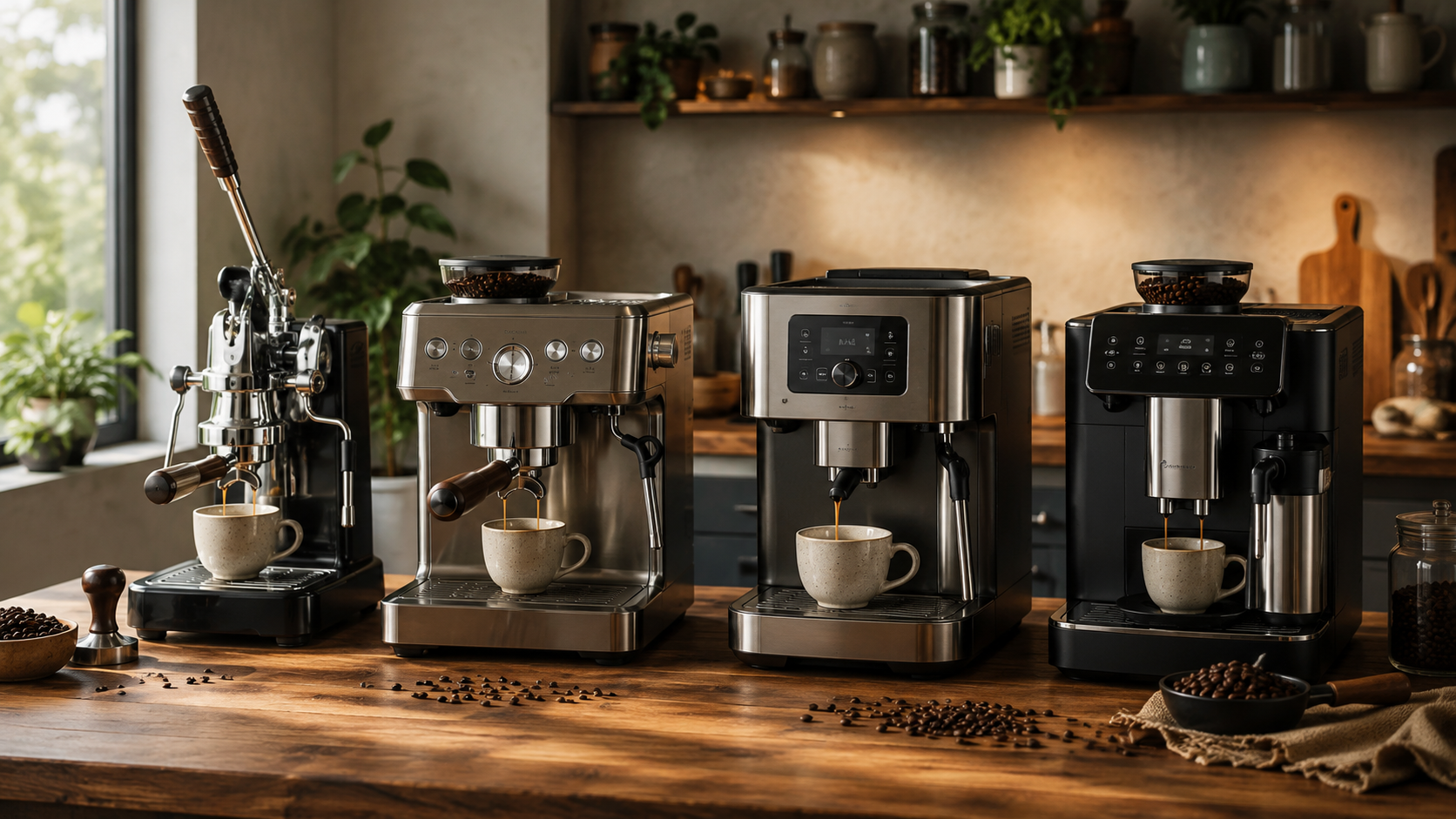
Choosing your first espresso machine can feel overwhelming.
With so many options available—manual, semi-automatic, automatic, and super-automatic—it’s easy to wonder which one is actually right for your needs. While every machine is capable of producing espresso, they offer very different experiences in terms of control, convenience, learning curve, and price.
The good news is that there isn’t one “best” espresso machine for everyone. The ideal choice depends on how involved you want to be in the brewing process and what kind of coffee routine fits your lifestyle.
In this guide, we’ll explain the four main types of espresso machines, compare their strengths and weaknesses, and help you decide which one matches your budget, experience, and daily habits.
New to espresso? Start with our beginner’s guide to espresso before choosing your first machine.
Why Choosing the Right Espresso Machine Matters
Buying an espresso machine is more than simply purchasing another kitchen appliance.
The machine you choose will influence:
- The quality of your espresso
- How much time you spend making coffee
- How easy it is to learn espresso brewing
- Your long-term coffee expenses
- Whether you’ll actually enjoy making espresso every day
Many beginners assume the most expensive machine is automatically the best. In reality, the best espresso machine is the one that matches your expectations and brewing style.
A simple semi-automatic machine often provides a better experience than an expensive super-automatic model if you enjoy learning the craft of espresso.
The Four Main Types of Espresso Machines
Modern home espresso machines generally fall into four categories:
- Manual Espresso Machines
- Semi-Automatic Espresso Machines
- Automatic Espresso Machines
- Super-Automatic Espresso Machines
Each type offers a different balance between convenience and control.
Let’s look at each one in more detail.
1. Manual Espresso Machines
Manual espresso machines, sometimes called lever espresso machines, give you complete control over every stage of brewing.
You control the pressure, extraction time, and water flow manually using a lever.
Pros
- Maximum control over extraction
- Authentic traditional espresso experience
- Beautiful classic design
- No electronic programming required
Cons
- Steep learning curve
- Requires practice and consistency
- Slower brewing process
- Not ideal for beginners
Manual machines are best suited for coffee enthusiasts who enjoy experimenting and don’t mind spending extra time perfecting each shot.
2. Semi-Automatic Espresso Machines
Semi-automatic machines are the most popular choice for home baristas.
The machine controls the water pressure, while you decide when to start and stop the extraction.
This combination provides an excellent balance between consistency and hands-on brewing.
Pros
- Excellent control
- Easier to learn than manual machines
- Great espresso quality
- Widely available in different price ranges
Cons
- Requires a quality grinder
- Some practice is still necessary
- More steps than fully automatic machines
For many coffee lovers, semi-automatic machines offer the perfect mix of convenience and customization.
If you’re buying your first machine, don’t miss our guide to the best espresso machines for beginners, where we compare popular models for new home baristas.
3. Automatic Espresso Machines
Automatic espresso machines look similar to semi-automatic models, but they simplify one important step.
Instead of manually stopping the espresso shot, the machine automatically ends the extraction once it reaches a preset volume. This feature helps produce more consistent results, especially for beginners.
Pros
- Consistent shot volume
- Easier to use than semi-automatic machines
- Less guesswork during brewing
- Good balance of convenience and quality
Cons
- Less flexibility for advanced users
- Usually more expensive than semi-automatic models
- Still requires grinding, tamping, and milk steaming
Automatic machines are an excellent choice for people who enjoy making espresso but prefer a little extra assistance during the brewing process.
4. Super-Automatic Espresso Machines
Super-automatic machines do almost everything for you.
With the press of a button, they grind the beans, tamp the coffee, brew the espresso, and often froth milk automatically.
They’re designed for maximum convenience and consistent results with minimal effort.
Pros
- Extremely easy to use
- Fast brewing process
- Built-in grinder
- One-touch coffee drinks
- Ideal for busy mornings
Cons
- Higher purchase price
- Less control over extraction
- More maintenance and cleaning
- Repairs can be expensive
For households that value speed and convenience over manual control, super-automatic machines can be an excellent investment.
Espresso Machine Types at a Glance
| Machine Type | Ease of Use | Control | Price | Best For |
|---|---|---|---|---|
| Manual | ★☆☆☆☆ | ★★★★★ | $$$ | Coffee enthusiasts |
| Semi-Automatic | ★★★☆☆ | ★★★★☆ | $$–$$$ | Most home baristas |
| Automatic | ★★★★☆ | ★★★☆☆ | $$$ | Beginners seeking consistency |
| Super-Automatic | ★★★★★ | ★★☆☆☆ | $$$$ | Convenience-focused users |
Which Espresso Machine Is Best for Beginners?
For most first-time buyers, a semi-automatic espresso machine offers the best overall experience.
It allows you to learn essential espresso techniques while still delivering excellent coffee with relatively simple operation.
If convenience is your highest priority and your budget allows, a super-automatic machine may be the better option.
Think about questions like:
- Do you enjoy learning new skills?
- How much time do you have each morning?
- Will multiple people use the machine?
- Do you want to make milk-based drinks regularly?
Answering these questions will help narrow down the best option for your lifestyle.
Your machine is only part of the equation. Using freshly roasted beans and storing them correctly will help you get the best possible espresso from any machine. Learn more in our guide on how to store coffee beans properly.
💡 Buying Tip: Don’t Forget the Grinder
Even the best espresso machine can’t make excellent coffee with poorly ground beans.
If you’re considering a manual, semi-automatic, or automatic machine, investing in a quality burr grinder is just as important as choosing the espresso machine itself.
A consistent grind size has a significant impact on extraction, flavor, and crema.
Need help choosing the right grinder? Read our complete comparison of blade grinders vs. burr grinders to understand why grind consistency matters for great espresso.
Common Mistakes When Buying an Espresso Machine
Buying your first espresso machine is exciting, but it’s also easy to make decisions you’ll later regret.
Here are some of the most common mistakes beginners make.
Buying the Most Expensive Machine
A higher price doesn’t automatically mean better coffee.
Many home users purchase advanced machines with features they’ll never use. Instead, choose a machine that matches your skill level and daily routine.
Ignoring the Coffee Grinder
A quality espresso machine cannot compensate for poorly ground coffee.
Freshly ground beans from a burr grinder will almost always produce better espresso than pre-ground coffee, regardless of the machine.
Forgetting About Maintenance
Every espresso machine requires regular cleaning.
Before buying, consider how much maintenance you’re willing to perform, including cleaning the steam wand, backflushing (if supported), descaling, and replacing water filters.
Choosing a machine that’s easy to maintain often leads to a better long-term ownership experience.
Choosing Features You’ll Never Use
Touchscreens, dozens of drink presets, and smart features may sound appealing, but many coffee drinkers use only one or two settings every day.
Focus on reliability, build quality, and ease of use rather than unnecessary extras.
Final Thoughts
There’s no single “best” espresso machine—only the one that’s best for you.
If you enjoy learning and experimenting, a manual or semi-automatic machine offers greater control. If convenience matters most, an automatic or super-automatic model can simplify your morning routine.
Before making your purchase, think about your budget, available counter space, daily coffee habits, and how involved you want to be in the brewing process.
A machine that fits your lifestyle is far more valuable than one with features you’ll rarely use.
Frequently Asked Questions
Which espresso machine type is best for beginners?
For most beginners, a semi-automatic espresso machine offers the best balance of control, ease of use, and long-term value.
Are super-automatic espresso machines worth it?
Yes, if convenience is your priority. They handle grinding, brewing, and often milk frothing with minimal effort, making them ideal for busy households.
Do I need a separate coffee grinder?
If you choose a manual, semi-automatic, or automatic espresso machine, a quality burr grinder is highly recommended for consistent espresso extraction.
What is the difference between automatic and semi-automatic espresso machines?
A semi-automatic machine lets you decide when to stop the extraction, while an automatic machine stops the shot automatically at a preset volume.
Can a beginner use a manual espresso machine?
Yes, but manual machines require patience and practice. Most beginners find semi-automatic models easier to learn while still producing excellent espresso.
Conclusion
Understanding the different espresso machine types is the first step toward making better coffee at home.
Whether you value precision, convenience, or affordability, choosing the right machine will make your daily coffee routine more enjoyable for years to come.
Take your time, compare your options carefully, and invest in a machine that fits both your lifestyle and your passion for coffee.