
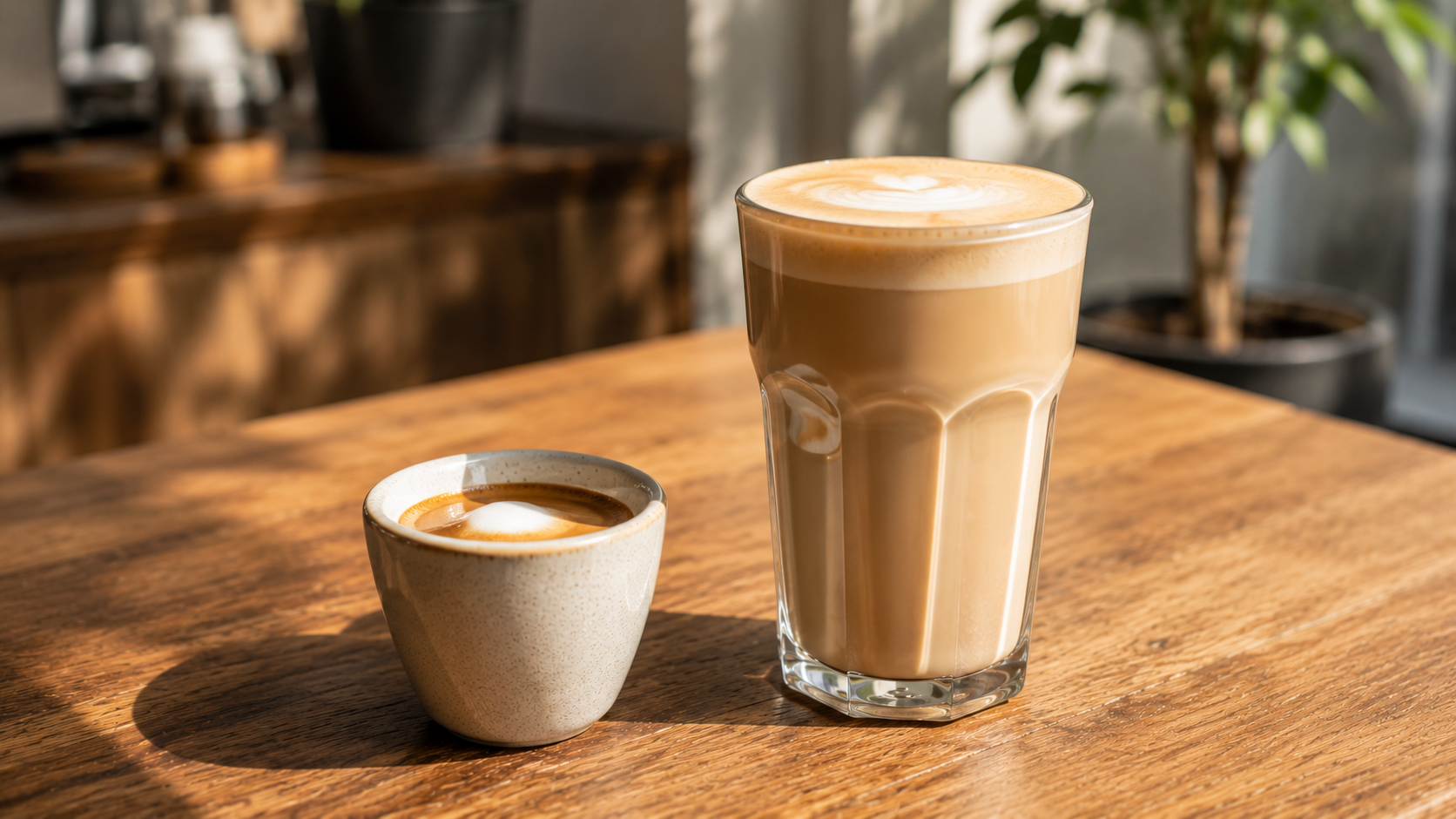
When comparing macchiato vs latte, it’s easy to assume they’re similar because both are espresso-based drinks. However, the amount of milk, the strength of the espresso, and the overall drinking experience are surprisingly different.
Understanding the differences between a macchiato and a latte will help you choose the drink that best matches your taste. Whether you prefer a bold espresso flavor or a smooth, creamy coffee, this guide explains everything you need to know.
If you’ve recently learned How to Make a Latte at Home, exploring the unique characteristics of a macchiato is the next step in expanding your home barista skills.
Macchiato vs Latte: What Is a Macchiato?
A traditional macchiato, also known as an Espresso Macchiato, is a simple espresso drink made by adding a small amount of steamed milk or milk foam to a shot of espresso.
The word macchiato means “stained” or “marked” in Italian, referring to espresso that is lightly marked with milk.
A classic macchiato typically includes:
- One or two shots of espresso
- A small spoonful of steamed milk or microfoam
- Strong espresso flavor
- Small serving size (2–3 oz)
Because it contains very little milk, a macchiato highlights the rich aroma, body, and intensity of espresso.
Macchiato vs Latte: What Is a Latte?
A latte is one of the most popular milk-based espresso drinks in the world.
It combines espresso with a generous amount of steamed milk and a thin layer of silky microfoam.
A traditional latte usually contains:
- One or two shots of espresso
- Steamed milk
- Thin microfoam
- Larger serving size (8–12 oz)
The additional milk softens the espresso, creating a smoother, creamier flavor that appeals to many coffee drinkers.
If you’re interested in making your own latte, check out our guide How to Make a Latte at Home in 7 Easy Steps.
Macchiato vs Latte: Key Differences
Although both drinks begin with espresso, they differ significantly in milk content, flavor, and texture.
| Feature | Macchiato | Latte |
|---|---|---|
| Espresso | 1–2 shots | 1–2 shots |
| Milk | Very little | Large amount |
| Foam | Small amount | Thin silky microfoam |
| Flavor | Strong and bold | Smooth and creamy |
| Cup Size | 2–3 oz | 8–12 oz |
| Best For | Espresso lovers | Milk coffee lovers |
These differences create two completely different coffee experiences.
Macchiato vs Latte: Espresso-to-Milk Ratio
The espresso-to-milk ratio is the defining characteristic when comparing macchiato vs latte.
A macchiato contains only a small amount of milk, allowing the espresso to remain the dominant flavor.
A latte, by contrast, uses much more steamed milk, producing a softer, smoother, and creamier drink.
If you enjoy tasting the natural characteristics of espresso beans, a macchiato is often the better choice.
Macchiato vs Latte: Milk Texture
Milk texture also plays an important role.
A macchiato uses just enough steamed milk or microfoam to soften the espresso without covering its bold flavor.
A latte contains silky microfoam blended with a generous amount of steamed milk, resulting in a creamy mouthfeel and a balanced coffee profile.
Both drinks use steamed milk, but the quantity dramatically changes the overall taste and drinking experience.
Macchiato vs Latte: Flavor Comparison
The biggest difference in macchiato vs latte is the flavor experience.
Although both drinks begin with espresso, the amount of milk dramatically changes their taste.
Macchiato
A macchiato delivers a bold, concentrated espresso flavor.
Because it contains only a small amount of steamed milk, the espresso remains the star of the drink. You’ll notice more of the coffee’s natural sweetness, acidity, and aroma.
Latte
A latte offers a smoother and creamier experience.
The larger amount of steamed milk softens the espresso, creating a balanced drink that’s easy to enjoy throughout the day.
If you enjoy tasting the full character of espresso beans, you’ll likely prefer a macchiato.
If you prefer a mellow, milk-forward coffee, a latte is probably the better choice.
Macchiato vs Latte: Calories and Nutrition
When comparing macchiato vs latte, calories mainly depend on the amount of milk.
Here’s a typical comparison using whole milk.
| Drink | Average Calories* |
|---|---|
| Macchiato (2–3 oz / 60–90 ml) | 15–40 |
| Latte (8–12 oz / 240–355 ml) | 150–190 |
*Values vary depending on milk type, serving size, and added syrups.
Because a macchiato contains very little milk, it is naturally much lower in calories than a latte.
Macchiato vs Latte: Which Drink Is Better for Beginners?
If you’re new to espresso drinks, a latte is generally the better place to start.
Choose a Latte if you:
- Prefer creamy coffee
- Enjoy mild espresso flavors
- Like flavored syrups
- Want a smooth introduction to espresso
Choose a Macchiato if you:
- Enjoy bold coffee flavors
- Want to taste more of the espresso
- Prefer smaller coffee drinks
- Appreciate traditional Italian espresso beverages
Neither drink is better—the right choice depends on your personal taste.
Macchiato vs Latte: Can You Make Them at Home?
Absolutely.
Both drinks are easy to prepare with the right equipment.
You’ll need:
- Fresh espresso beans
- An espresso machine
- A steam wand or milk frother
- Cold whole milk
- A small espresso cup for a macchiato
- A larger latte cup for a latte
For a macchiato, add only a spoonful of steamed milk or microfoam to freshly brewed espresso.
For a latte, combine espresso with steamed milk and finish with a thin layer of silky microfoam.
Macchiato vs Latte: Common Mistakes to Avoid
Many beginners unintentionally change the character of these drinks.
Avoid these common mistakes:
- Adding too much milk to a macchiato
- Using overly thick foam
- Overheating the milk above 160°F (71°C)
- Brewing stale coffee beans
- Using poor-quality water
- Serving a macchiato in a large cup
Small improvements in technique can make a significant difference in flavor.
Best Coffee Beans for Macchiato and Latte
Freshly roasted espresso beans produce the best results in both drinks.
Medium and medium-dark roasts are ideal because they balance sweetness, acidity, and body while pairing beautifully with steamed milk.
Single-origin beans are excellent for macchiatos, where the espresso remains the primary flavor.
If you’re looking for the perfect beans, our guide to Best Coffee Beans for Espresso: How to Choose the Right Beans can help you choose the ideal roast for your home coffee setup.
Macchiato vs Latte Frequently Asked Questions
Is a macchiato stronger than a latte?
Yes. A traditional macchiato contains very little milk, allowing the espresso flavor to remain bold and concentrated. A latte contains much more steamed milk, creating a smoother and milder taste.
Which drink has more milk, a macchiato or a latte?
A latte contains significantly more steamed milk than a macchiato.
A macchiato uses only a small amount of steamed milk or microfoam to soften the espresso without overpowering it.
Which drink has fewer calories?
A macchiato generally has fewer calories because it contains much less milk than a latte.
If both drinks are made without flavored syrups, a traditional macchiato is one of the lowest-calorie espresso beverages.
Can I make a macchiato at home?
Absolutely.
All you need is freshly brewed espresso and a small amount of steamed milk or silky microfoam. An espresso machine and steam wand produce the most authentic results, but a milk frother can also work well for beginners.

Final Thoughts on Macchiato vs Latte
When comparing macchiato vs latte, the biggest differences come down to the espresso-to-milk ratio, flavor intensity, and overall drinking experience.
A macchiato highlights the rich, bold character of espresso with just a touch of steamed milk, making it ideal for coffee lovers who enjoy a strong and authentic espresso taste.
A latte offers a smoother, creamier experience with more steamed milk and silky microfoam, making it one of the most approachable espresso drinks for beginners.
Neither drink is better—they simply suit different preferences. Trying both is the best way to discover which style fits your coffee routine.
For more information about specialty coffee standards and coffee education, visit the Specialty Coffee Association (SCA).
Related Guides
Continue improving your coffee knowledge with these guides: