
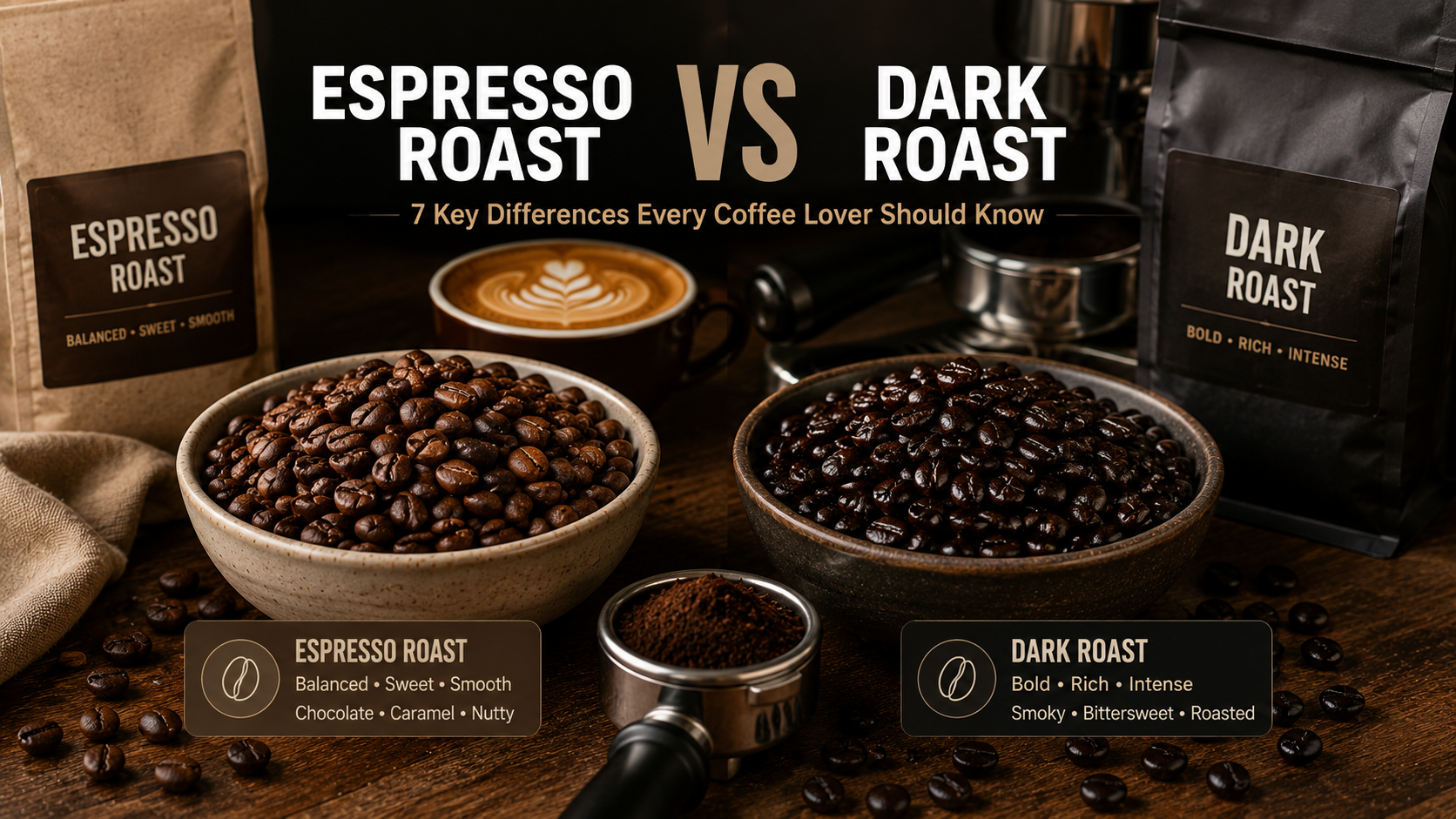
Espresso roast vs dark roast is one of the most common questions among coffee lovers. Many people assume they are the same, but they actually refer to two different aspects of coffee.
An espresso roast is typically developed to create a balanced espresso with sweetness, body, and rich crema, while a dark roast simply describes how long the beans have been roasted. Although many espresso blends use darker roasting profiles, not every dark roast is suitable for espresso.
Understanding espresso roast vs dark roast will help you choose the right beans whether you’re brewing espresso, making milk-based drinks, or enjoying black coffee.
In this guide, we’ll explain the key differences between espresso roast and dark roast, including flavor, roasting level, brewing performance, and which one is best for your coffee preferences.
Espresso Roast vs Dark Roast: What Is an Espresso Roast?
An espresso roast is a roast profile designed specifically for espresso extraction.
Rather than referring to a fixed roast level, espresso roast focuses on producing beans that perform well under high pressure while delivering a balanced cup with rich sweetness, smooth body, and lasting crema.
Typical characteristics include:
- Balanced sweetness
- Rich crema
- Low to medium acidity
- Smooth mouthfeel
- Chocolate, caramel, and nutty tasting notes
Many specialty coffee roasters now produce medium or medium-dark espresso roasts, proving that espresso beans do not always have to be very dark.
Espresso Roast vs Dark Roast: What Is a Dark Roast?
A dark roast describes how far the coffee beans have been roasted.
These beans remain in the roaster longer, developing darker oils on the surface and deeper roasted flavors.
Common characteristics include:
- Bold roasted flavor
- Smoky aroma
- Lower perceived acidity
- Fuller body
- Bittersweet finish
Dark roast beans can certainly be used for espresso, but they are also popular for drip coffee, French press, and other brewing methods.
Roast level alone does not determine whether a coffee is ideal for espresso.
Espresso Roast vs Dark Roast: Key Differences
Although these terms are often used interchangeably, they describe different things.
| Feature | Espresso Roast | Dark Roast |
|---|---|---|
| Definition | Roast profile for espresso | Roast level |
| Typical Roast | Medium–Medium Dark | Medium Dark–Very Dark |
| Main Goal | Balanced espresso extraction | Bold roasted flavor |
| Crema | Excellent | Good |
| Sweetness | Higher | Lower |
| Bitterness | Moderate | Higher |
| Best Brewing Method | Espresso | Multiple brewing methods |
The biggest takeaway is that espresso roast vs dark roast is not a direct comparison of roast levels. One refers to the intended brewing style, while the other refers to how long the beans have been roasted.
Espresso Roast vs Dark Roast: Flavor Profile
Flavor is where the differences become most noticeable.
Espresso Roast
Espresso roasts usually emphasize:
- Chocolate
- Caramel
- Hazelnut
- Brown sugar
- Balanced sweetness
These flavors pair exceptionally well with steamed milk, making espresso roasts ideal for lattes, cappuccinos, and flat whites.
Dark Roast
Dark roasts often develop:
- Smoky notes
- Toasted nuts
- Dark chocolate
- Molasses
- Roasted bitterness
While many coffee drinkers enjoy these bold flavors, darker roasting can reduce the unique characteristics of the coffee’s origin.
Espresso Roast vs Dark Roast: Roast Level Comparison
One of the biggest misunderstandings about espresso roast vs dark roast is that people often believe espresso roast is always darker.
In reality, modern specialty coffee roasters frequently develop medium or medium-dark espresso roasts because they preserve more sweetness and complexity.
Here’s a general comparison:
| Roast Level | Typical Use | Flavor |
|---|---|---|
| Medium Roast | Filter coffee & some espresso | Bright, sweet, complex |
| Medium-Dark Roast | Popular espresso blends | Balanced and smooth |
| Dark Roast | Espresso, drip, French press | Bold, smoky, bittersweet |
Today’s specialty cafés often avoid extremely dark roasting because it can hide the coffee’s natural origin characteristics.
Espresso Roast vs Dark Roast: Acidity
Acidity plays an important role in the overall flavor of coffee.
An espresso roast usually maintains low to medium acidity, creating a balanced espresso with pleasant sweetness.
Dark roasts generally have lower perceived acidity because the roasting process breaks down many of the acids found in green coffee beans.
If you enjoy bright fruity flavors, a lighter espresso roast may suit your taste better.
If you prefer smooth, bold coffee with very little acidity, a dark roast is often the better choice.
Espresso Roast vs Dark Roast: Crema
One reason many espresso enthusiasts choose espresso roast is its ability to produce excellent crema.
A well-developed espresso roast often creates:
- Thick golden crema
- Stable foam
- Rich aroma
- Smooth texture
Dark roast beans can also produce crema, but because they release more oils during roasting, the crema may appear darker and disappear more quickly.
Freshly roasted beans are far more important than roast level alone when it comes to producing beautiful crema.
Espresso Roast vs Dark Roast: Milk-Based Drinks
When preparing milk-based drinks such as lattes or cappuccinos, both roast styles can work well—but they create very different experiences.
Espresso Roast
Pairs well with:
- Latte
- Cappuccino
- Flat White
- Cortado
The balanced sweetness and chocolate notes blend naturally with steamed milk.
Dark Roast
Works well if you enjoy:
- Strong coffee flavor
- Smoky notes
- Bold finish
However, extremely dark roasts can sometimes overpower the sweetness of milk and reduce flavor balance.
Espresso Roast vs Dark Roast: Which Roast Should You Choose?
The answer depends on how you like your coffee.
Choose an espresso roast if you:
- Brew espresso regularly
- Enjoy balanced sweetness
- Prefer smooth chocolate or caramel notes
- Make milk-based drinks at home
Choose a dark roast if you:
- Prefer bold roasted flavors
- Enjoy black coffee
- Like smoky aromas
- Want minimal acidity
Neither option is universally better. The ideal choice depends on your brewing method and personal taste preferences.
Espresso Roast vs Dark Roast: Common Mistakes
Many beginners make the following mistakes when buying coffee beans.
Avoid these common problems:
- Assuming every dark roast is an espresso roast
- Choosing roast level before checking freshness
- Ignoring roast date
- Buying oily beans simply because they look darker
- Using old coffee beans
- Believing darker always means stronger caffeine
Freshness, bean quality, and proper extraction have a much greater impact on flavor than roast level alone.
Best Coffee Beans for Espresso Roast
If you’re looking for beans specifically for espresso, choose coffees with tasting notes such as:
- Chocolate
- Caramel
- Hazelnut
- Brown Sugar
- Almond
These flavor profiles create smooth, balanced espresso and pair exceptionally well with steamed milk.
For more detailed recommendations, be sure to read our guide Best Coffee Beans for Espresso: How to Choose the Right Beans, where we explain how roast level, bean origin, and freshness affect espresso quality.
Espresso Roast vs Dark Roast Frequently Asked Questions
Is espresso roast always darker than dark roast?
No.
An espresso roast is not a specific roast level. Many specialty coffee roasters use medium or medium-dark roast profiles for espresso to preserve sweetness and complexity.
Can I use dark roast beans for espresso?
Absolutely.
Dark roast beans can produce excellent espresso, especially if you enjoy bold, smoky flavors. However, not every dark roast is optimized for espresso extraction.
Which roast has more caffeine?
Contrary to popular belief, the caffeine difference between espresso roast and dark roast is very small.
Roast level has much less impact on caffeine than the coffee dose and brewing method.
Which roast is better for lattes?
Espresso roast is usually the better choice because its chocolate, caramel, and nutty notes pair beautifully with steamed milk.
Many cafés specifically choose espresso blends to create balanced milk-based drinks.
Final Thoughts
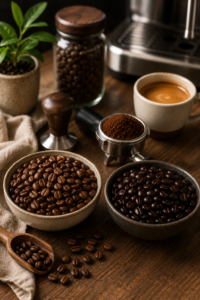
Understanding espresso roast vs dark roast helps you make better coffee choices at home and in your favorite café.
An espresso roast is crafted to deliver balanced extraction, rich crema, and a smooth flavor profile, while a dark roast simply refers to beans roasted for a longer period to achieve a bolder, smokier taste.
Neither option is inherently better. The best choice depends on your brewing method, flavor preferences, and the type of coffee you enjoy most.
Whether you’re pulling espresso shots or brewing a latte, selecting fresh, high-quality beans will always have the greatest impact on your cup.
For more information about specialty coffee standards, roasting, and brewing techniques, visit the Specialty Coffee Association (SCA).
Related Guides
Continue exploring espresso and coffee beans:
- What Is Espresso? A Beginner’s Guide for Coffee Lovers
- Best Coffee Beans for Espresso: How to Choose the Right Beans
- Single Shot vs Double Espresso: 7 Differences Every Coffee Lover Should Know
- Ristretto vs Espresso: 7 Key Differences Every Coffee Lover Should Know
- Mocha vs Latte: 7 Key Differences Every Coffee Lover Should Know