
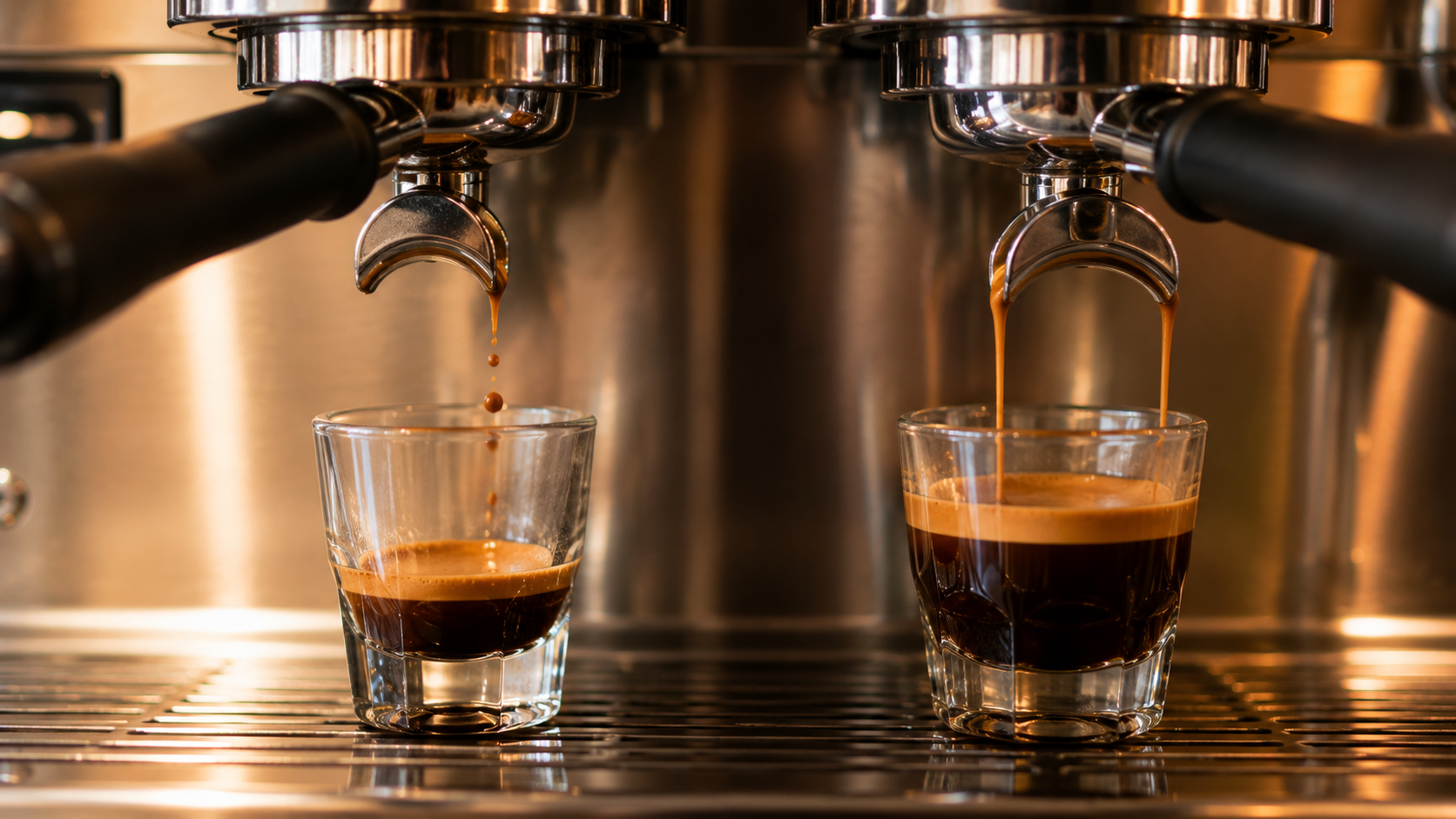
Many coffee lovers compare ristretto vs espresso because both drinks are made using the same espresso machine and finely ground coffee beans. At first glance, they may look nearly identical, but their extraction methods create noticeably different flavors, aromas, and textures.
Understanding the differences between a ristretto and an espresso can help you choose the right coffee based on your personal taste. Whether you prefer a sweeter, more concentrated shot or a balanced and traditional espresso, knowing how each is prepared makes all the difference.
In this guide, we’ll explain everything you need to know about ristretto vs espresso, including extraction time, flavor, caffeine, and which shot is best for your coffee routine.
Ristretto vs Espresso: What Is a Ristretto?
A ristretto is a short espresso shot made using the same amount of ground coffee as a regular espresso but extracted with less water.
The word ristretto means “restricted” or “shortened” in Italian, referring to the shorter extraction.
Typical characteristics of a ristretto include:
- One shot of espresso coffee
- Approximately 15–20 ml of liquid
- Extraction time of about 15–20 seconds
- Thick, syrupy body
- Naturally sweeter flavor
- Less bitterness
Because the extraction stops earlier, fewer bitter compounds are released, producing a richer and more concentrated taste.
Ristretto vs Espresso: What Is an Espresso?
An espresso is the standard foundation for many popular coffee drinks, including lattes, cappuccinos, flat whites, and Americanos.
It is brewed by forcing hot water through finely ground coffee under high pressure.
A traditional espresso typically features:
- One shot of espresso
- Approximately 30 ml of liquid
- Extraction time of about 25–30 seconds
- Balanced sweetness, acidity, and bitterness
- Rich crema
- Full-bodied flavor
Espresso is designed to create a balanced cup by extracting a wider range of coffee compounds than a ristretto.
Ristretto vs Espresso: Key Differences
Although both drinks use the same coffee beans and brewing equipment, their extraction methods create distinct characteristics.
| Feature | Ristretto | Espresso |
|---|---|---|
| Water Used | Less | Standard |
| Extraction Time | 15–20 seconds | 25–30 seconds |
| Yield | 15–20 ml | 30 ml |
| Flavor | Sweeter and more concentrated | Balanced and complex |
| Bitterness | Lower | Moderate |
| Body | Thick and syrupy | Full-bodied |
| Crema | Rich | Rich |
These differences make each shot suitable for different coffee preferences and recipes.
Ristretto vs Espresso: Extraction Time
The most important difference in ristretto vs espresso is the extraction time.
A ristretto is extracted for a shorter period using less water. This captures the coffee’s sweeter and more aromatic compounds while limiting the extraction of bitter flavors.
A traditional espresso continues extracting for several more seconds, producing a more balanced combination of sweetness, acidity, and bitterness.
For experienced coffee drinkers, even a few seconds of extraction can noticeably change the flavor profile.
Ristretto vs Espresso: Coffee-to-Water Ratio
Both drinks begin with the same amount of finely ground coffee, but they differ in how much water passes through the coffee bed.
A ristretto uses a lower coffee-to-water ratio, producing a smaller and more concentrated shot.
An espresso uses more water, allowing additional soluble compounds to be extracted and creating a more rounded flavor.
Because of this difference, many specialty cafés choose ristretto shots for milk-based drinks when they want to emphasize sweetness without increasing bitterness.
Ristretto vs Espresso: Flavor Comparison
The biggest difference in ristretto vs espresso is the flavor.
Although both drinks use the same coffee beans, grind size, and espresso machine, the shorter extraction of a ristretto creates a noticeably different taste.
Ristretto
A ristretto is often described as sweeter and smoother.
Because less water passes through the coffee grounds, fewer bitter compounds are extracted. The result is a concentrated shot with rich sweetness, syrupy texture, and a more intense aroma.
Espresso
A traditional espresso offers a more balanced flavor profile.
The longer extraction captures additional coffee compounds, producing a combination of sweetness, pleasant acidity, and mild bitterness. This balance makes espresso one of the most versatile coffee preparations.
If you enjoy tasting the natural sweetness of coffee, a ristretto may become your favorite.
If you prefer a well-rounded and classic espresso experience, a traditional espresso is an excellent choice.
Ristretto vs Espresso: Strength and Caffeine
Many people assume that a ristretto contains more caffeine because it tastes stronger.
In reality, that’s not necessarily true.
Since a ristretto uses less water and has a shorter extraction time, it often contains slightly less caffeine than a standard espresso.
| Drink | Yield | Estimated Caffeine* |
|---|---|---|
| Ristretto | 15–20 ml | 50–60 mg |
| Espresso | 30 ml | 63–75 mg |
*Actual caffeine content varies depending on the coffee beans, roast level, and extraction method.
Although a ristretto may have slightly less caffeine, its concentrated flavor often makes it seem stronger.
Ristretto vs Espresso: Which Shot Is Better?
There is no single “better” choice.
The best option depends on how you enjoy your coffee.
Choose a Ristretto if you:
- Prefer sweeter espresso
- Enjoy concentrated flavors
- Like less bitterness
- Want a richer mouthfeel
Choose an Espresso if you:
- Prefer balanced coffee flavors
- Enjoy traditional Italian espresso
- Make milk-based drinks regularly
- Want a more versatile coffee shot
Many specialty cafés even use ristretto shots for lattes and flat whites because they create a naturally sweeter flavor.
Ristretto vs Espresso: Can You Make Ristretto at Home?
Absolutely.
If you own an espresso machine, making a ristretto is simple.
You’ll need:
- Freshly roasted espresso beans
- A quality burr grinder
- An espresso machine
- Filtered water
Use the same amount of ground coffee as you would for a regular espresso, but stop the extraction earlier—typically when the shot reaches 15–20 ml.
Dialing in your grinder correctly is especially important, as small adjustments can significantly affect the final taste.
Ristretto vs Espresso: Common Mistakes to Avoid
Even experienced home baristas can make mistakes when preparing ristretto shots.
Avoid these common errors:
- Grinding too coarsely
- Using stale coffee beans
- Stopping the extraction too early
- Allowing the shot to over-extract
- Ignoring brew ratio
- Using water that is too hot
Consistency in grind size, dose, and extraction time is the key to producing excellent espresso and ristretto shots.
Best Coffee Beans for Ristretto and Espresso
Freshly roasted beans make a noticeable difference in both drinks.
Medium and medium-dark espresso roasts generally produce the most balanced results.
For ristretto, many coffee enthusiasts prefer beans with natural chocolate, caramel, or berry notes because the shorter extraction highlights sweetness and complexity.
If you’re choosing beans for your home setup, our guide Best Coffee Beans for Espresso: How to Choose the Right Beans can help you find the right roast for both ristretto and traditional espresso.
Ristretto vs Espresso Frequently Asked Questions
Is a ristretto stronger than an espresso?
A ristretto tastes stronger because it is more concentrated and uses less water. However, it does not necessarily contain more caffeine than a standard espresso.
Which has more caffeine, ristretto or espresso?
A traditional espresso usually contains slightly more caffeine because it has a longer extraction time, allowing more caffeine to be dissolved from the coffee grounds.
Can I use a ristretto shot in milk-based drinks?
Yes. Many specialty coffee shops use ristretto shots in drinks like lattes and flat whites because they provide a sweeter, richer flavor without increasing bitterness.
Which is better for beginners?
If you’re new to espresso, a traditional espresso is often the better starting point because it offers a balanced flavor profile.
If you already enjoy bold coffee flavors and want a sweeter, more concentrated shot, a ristretto is worth trying.
Final Thoughts on Ristretto vs Espresso
When comparing ristretto vs espresso, the biggest differences come down to extraction time, water volume, flavor, and overall balance.
A ristretto delivers a sweeter, richer, and more concentrated espresso experience by using less water and a shorter extraction.
A traditional espresso provides a balanced combination of sweetness, acidity, and bitterness, making it one of the most versatile coffee preparations in the world.
Neither option is better than the other. The best choice depends on your personal taste and how you enjoy your coffee.
Whether you choose a ristretto or a traditional espresso, understanding the differences in ristretto vs espresso will help you appreciate espresso extraction and brew café-quality coffee with greater confidence.
Related Guides
Continue building your espresso knowledge with these beginner-friendly guides:
- What Is Espresso? A Beginner’s Guide for Coffee Lovers
- Best Coffee Beans for Espresso: How to Choose the Right Beans
- How to Froth Milk for Espresso at Home
- Americano vs Long Black: 7 Key Differences Every Coffee Lover Should Know
- Macchiato vs Latte: 7 Key Differences Every Coffee Lover Should Know