
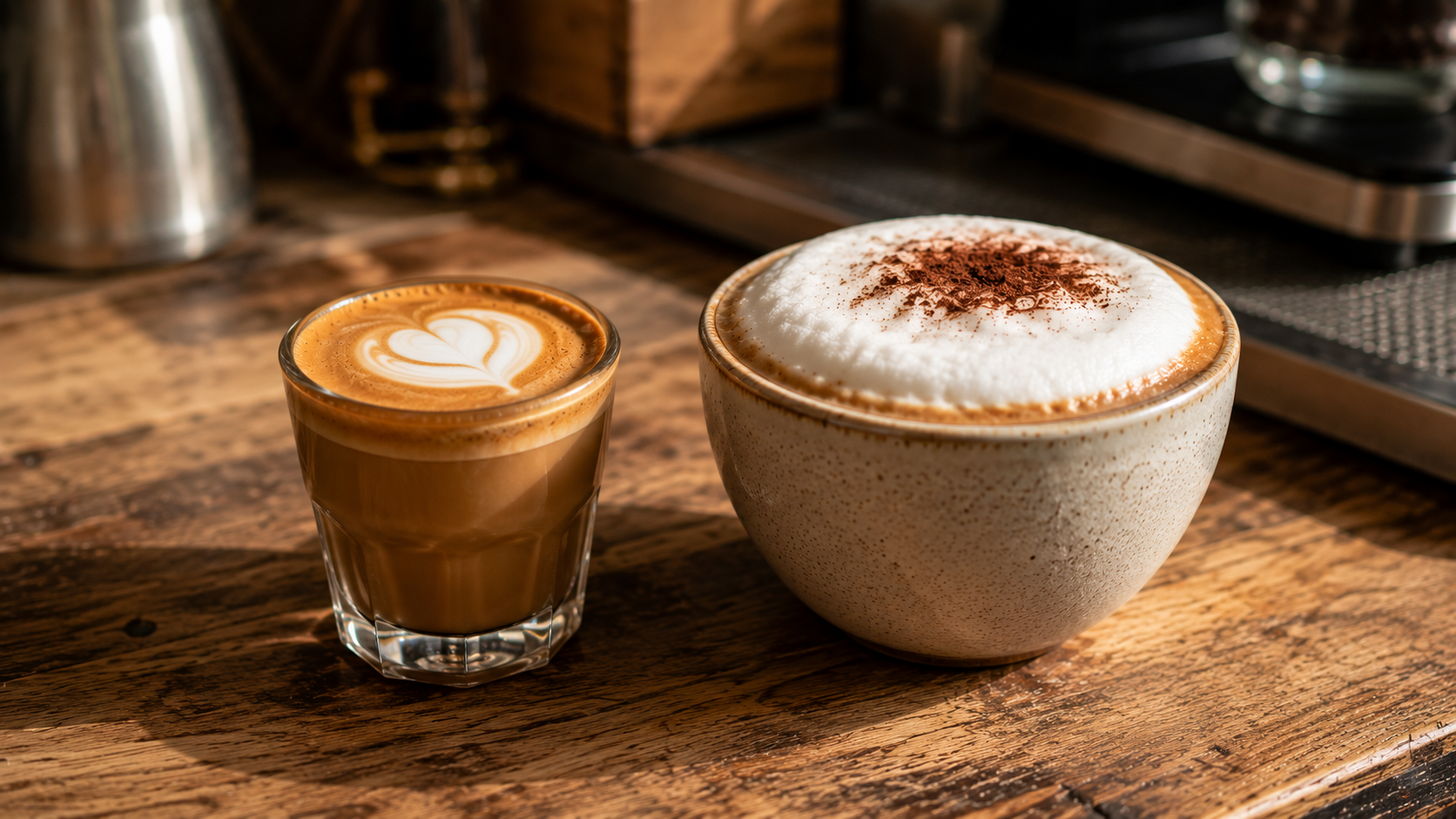
Cortado vs cappuccino is primarily a comparison of milk quantity, aeration, serving size, and coffee intensity. Both drinks combine espresso with steamed milk, but they are designed to deliver noticeably different experiences.
A cortado is typically small, concentrated, and made with roughly equal amounts of espresso and steamed milk. A cappuccino generally contains more aerated milk, creating a lighter texture and a more prominent foam layer.
Recipes vary between countries and coffee shops, so the drink name alone does not guarantee one exact ratio. Understanding the intended balance will help you order—or prepare—the drink that suits your taste.
Cortado vs Cappuccino at a Glance

| Feature | Cortado | Cappuccino |
|---|---|---|
| Coffee base | Usually espresso | Espresso |
| Typical milk balance | Approximately equal to the espresso | More milk relative to the espresso |
| Aeration | Very low | Higher |
| Foam layer | Thin or minimal | Deeper and more noticeable |
| Typical size | About 3–5 oz | About 5–6 oz, sometimes larger |
| Coffee intensity | Concentrated and prominent | Softer but still coffee-forward |
| Mouthfeel | Dense, smooth, and compact | Light, creamy, and aerated |
| Traditional serving style | Small glass or cup | Small ceramic cup |
| Best for | People who want espresso softened slightly | People who enjoy espresso with a foamy texture |
The most reliable distinction is not whether one drink contains a single or double shot. Shot counts vary. The important difference is how much milk and air are added relative to the espresso.
What Is a Cortado?
A cortado is a small espresso drink associated with Spain. Its name comes from the Spanish verb cortar, meaning “to cut,” because the milk cuts through the intensity of the coffee.
A common modern recipe combines espresso and warm steamed milk in approximately equal amounts. The milk softens the espresso’s acidity and bitterness without covering its underlying flavor.
A typical cortado has:
- One or two espresso shots, depending on the café
- A milk-to-espresso ratio close to 1:1
- Little or no visible foam
- A compact serving size
- A strong but rounded coffee flavor
- A smooth, dense mouthfeel
Many specialty cafés prepare it with a double shot and serve it in a 4–5 oz glass. However, this is a common café convention rather than a worldwide rule.
In Spain, the term may refer more broadly to espresso “cut” with a smaller quantity of milk. Ordering the same name in different countries can therefore produce slightly different drinks.
What Is a Cappuccino?
A cappuccino is an espresso drink prepared with steamed, aerated milk. It is normally served in a cup larger than a cortado but smaller than a typical latte.
The familiar description of equal parts espresso, steamed milk, and foam provides a useful starting point. Modern cappuccinos, however, are often made with integrated microfoam rather than three sharply separated layers.
A cappuccino generally has:
- One or two espresso shots
- More milk than a cortado
- Greater aeration
- A noticeable but creamy foam layer
- A lighter mouthfeel
- A clearly detectable espresso flavor
Some cafés serve traditional cappuccinos with a relatively dry cap of foam. Specialty cafés often use glossy microfoam that remains cohesive with the liquid milk.
Despite these variations, a cappuccino should feel more aerated and less concentrated than a cortado.
For a closer comparison with a milkier espresso drink, see our guide to latte vs cappuccino.
1. Cortado Uses Less Milk
Milk quantity creates the most important practical distinction between these drinks.
A cortado commonly contains an amount of milk close to the espresso volume. The goal is to reduce the sharper edges of the coffee while preserving its aroma, body, and roast character.
A cappuccino normally contains a greater milk volume. Even when both drinks begin with the same espresso dose, the cappuccino will usually taste softer because the coffee is distributed through more milk and foam.
This does not mean every cappuccino is weak. A well-balanced cappuccino should still taste unmistakably like coffee.
Choose a cortado when you want milk to support the espresso. Choose a cappuccino when you want espresso and aerated milk to share the experience more evenly.
2. Cappuccino Contains More Aeration
Milk texture is just as important as milk quantity.
Cortado milk is heated with very little air added. It should remain fluid and silky, allowing it to blend closely with the espresso. A thin layer of microfoam may appear on the surface, particularly when simple latte art is poured, but a thick foam cap is not the goal.
Cappuccino milk is aerated more substantially. Introducing air increases its volume and produces the drink’s characteristic light mouthfeel.
Proper cappuccino foam should be:
- Fine rather than visibly bubbly
- Creamy rather than stiff
- Evenly incorporated into the milk
- Stable enough to create a deeper texture
- Smooth enough to pour
A cappuccino does not need to look like espresso wearing a bubble-bath hat. Fuller foam can still be glossy and cohesive.
Our guide to frothing milk for espresso explains how aeration and steaming technique change milk texture.
3. Cortado Tastes More Concentrated
A cortado normally provides a more immediate espresso flavor because relatively little milk is present.
Depending on the beans and extraction, you may notice:
- Roast character
- Chocolate or caramel notes
- Fruit-like acidity
- Nutty flavors
- Natural bitterness
- A fuller coffee body
Milk rounds off these characteristics without diluting them extensively.
A cappuccino offers a softer progression. The foam reaches the palate first, followed by a mixture of espresso and warm milk. This produces a lighter sensation even when the espresso dose is identical.
The cortado will usually taste stronger, but taste intensity does not necessarily indicate more caffeine.
4. Their Serving Sizes Are Different
A cortado is one of the smaller milk-based espresso drinks. It is often served in a vessel holding approximately 3–5 oz.
A cappuccino is commonly served in a 5–6 oz cup, although 7–8 oz and larger versions appear on many menus.
Cup size affects more than presentation. Using the same espresso dose in a larger cup requires more milk, which reduces the concentration of the finished drink.
Oversized café versions can blur the boundaries between cappuccino, flat white, and latte. When the distinction matters, ask the barista about:
- Cup volume
- Number of espresso shots
- Approximate milk quantity
- Foam texture
- Whether the milk is wet or dry
A café’s answer may reveal more than the menu name.
5. Caffeine Depends on the Espresso Dose
A cortado often tastes more powerful than a cappuccino, but it does not automatically contain more caffeine.
If both drinks contain the same espresso dose, their caffeine content should be similar. Milk and foam change the concentration and sensory intensity, not the caffeine already extracted into the coffee.
A cortado may contain more caffeine when it is prepared with two shots and the cappuccino contains one. The reverse is also possible.
Caffeine can vary according to:
- Number of shots
- Ground coffee dose
- Bean variety
- Espresso yield
- Extraction recipe
- Café serving standard
If caffeine matters to you, ask how many shots are used. Trying to judge it from flavor is about as reliable as guessing someone’s age from their coffee order.
6. Cappuccino Usually Contains More Milk Calories
Espresso itself contains very few calories. Most calories in either drink come from milk and added ingredients.
A cappuccino usually contains more milk than a cortado prepared with the same espresso dose. It will therefore often contain more calories when both use the same type of milk.
An exact universal comparison would be misleading because the total depends on:
- Actual serving size
- Quantity of milk
- Whole, reduced-fat, or skim milk
- Plant-based milk formulation
- Added sugar
- Flavored syrup
- Chocolate powder or other toppings
A plain cortado will generally be the lighter option, but a sweetened cortado can contain more calories than an unsweetened cappuccino.
Plant-based milk is not automatically lower in calories or sugar. Nutrition varies significantly between brands, particularly among barista-formulated products.
7. The Drinking Experience Is Different
A cortado is compact and direct. Because the beverage is small, its temperature, texture, and flavor remain relatively consistent from the first sip to the last.
Its limited milk volume makes it suitable for people who enjoy espresso but want its intensity slightly softened.
A cappuccino creates more contrast. The aerated surface gives the opening sips a light texture, while the espresso and milk become more integrated as the drink is consumed.
A cortado may feel:
- Dense
- Concentrated
- Smooth
- Balanced
- Espresso-led
A cappuccino may feel:
- Airy
- Creamy
- Softer
- More layered
- Foam-led at the beginning
Neither experience is inherently better. They simply emphasize different parts of the same two ingredients.
Does a Cortado Always Use a 1:1 Ratio?
A 1:1 balance of espresso and milk is the most widely recognized cortado formula, but it should not be treated as an international law.
The drink varies according to regional tradition and café practice. Some versions use one espresso shot with a small splash of milk. Others use a double shot with an equal volume of steamed milk.
The serving vessel also influences perception. The Gibraltar, a drink popularized in San Francisco, is closely related to the cortado and is traditionally served in a small Gibraltar glass.
Outside Spain, some cafés use the names cortado and Gibraltar interchangeably. Others consider them different house recipes.
The essential characteristics remain more useful than an exact measurement: small size, restrained milk, minimal foam, and a prominent espresso flavor.
Cortado vs Flat White vs Cappuccino
These three drinks can appear confusing because all contain espresso and textured milk.
| Drink | Typical Character |
|---|---|
| Cortado | Small, concentrated, approximately equal espresso and milk, minimal foam |
| Flat white | Larger than a cortado, silky microfoam, more milk, commonly made with a double shot |
| Cappuccino | More aerated milk, deeper foam texture, lighter mouthfeel |
| Latte | Usually the largest and most milk-forward option |
For a more detailed look at two silky microfoam drinks, compare flat white vs latte and their typical serving styles.
A cortado is generally the most concentrated of the four. A flat white offers more milk while maintaining a smooth, coffee-forward balance. A cappuccino emphasizes aeration, while a latte emphasizes milk volume.
The definitions can overlap between cafés, so the comparison describes common practice rather than rigid rules.
Which Milk Works Best?
Milk selection affects sweetness, texture, and how clearly the coffee remains detectable.
Whole Milk
Whole milk creates a rich texture and natural sweetness. It works well in both drinks and is especially forgiving for home milk steaming.
In a cortado, its richness can soften intense espresso without requiring much volume. In a cappuccino, it helps create creamy, cohesive foam.
Reduced-Fat or Skim Milk
Lower-fat milk can produce substantial foam, but its mouthfeel is usually lighter.
Skim milk may suit someone who prefers an airy cappuccino. In a cortado, it can make the drink feel less dense and rich.
Barista-Style Oat Milk
Barista oat milk is formulated to handle heat and create more stable microfoam than many ordinary oat drinks.
Its natural sweetness can complement chocolatey espresso, although it may soften delicate coffee flavors.
Soy Milk
Soy milk can foam effectively because of its protein content. However, excessive heat or sudden contact with acidic espresso may cause instability.
Allowing the espresso to cool briefly and controlling milk temperature can help.
Almond Milk
Results vary considerably among brands. Barista versions usually perform better, while thinner almond drinks may separate or produce coarse bubbles.
For a cortado, choose a milk that complements the espresso without dominating its flavor.
Which Drink Should You Order?

Order a cortado if you:
- Enjoy strong espresso flavor
- Want only enough milk to soften the coffee
- Prefer a small drink
- Dislike thick foam
- Want to taste the beans more clearly
- Prefer a dense, smooth texture
Order a cappuccino if you:
- Enjoy creamy microfoam
- Want a slightly larger drink
- Prefer a lighter mouthfeel
- Find concentrated espresso too intense
- Like a traditional café classic
- Enjoy the contrast between foam and coffee
If a latte feels too milky but straight espresso feels too sharp, a cortado occupies a useful middle ground.
If you like coffee flavor but want more cushioning from warm, aerated milk, a cappuccino will probably be more comfortable.
How to Make a Cortado at Home
A home cortado requires espresso and a small quantity of gently textured milk.
- Preheat a small 4–5 oz glass or cup.
- Brew one or two espresso shots.
- Pour cold milk into a small pitcher.
- Introduce only a minimal amount of air while steaming.
- Continue heating while creating a gentle whirlpool.
- Tap and swirl the pitcher to remove visible bubbles.
- Add approximately the same volume of milk as espresso.
- Serve immediately.
The milk should blend with the espresso rather than sit above it as a thick foam layer.
If you do not have an espresso machine, concentrated coffee from a moka pot or AeroPress can create a similar style. It will not reproduce the exact body and extraction of espresso, but the milk balance can still approximate the experience.
How to Make a Cappuccino at Home
A cappuccino requires more aeration and a slightly larger cup.
- Brew espresso into a preheated 5–6 oz cup.
- Begin with cold milk in a clean pitcher.
- Introduce more air than you would for cortado milk.
- Submerge the steam tip and keep the milk rotating.
- Stop before the milk becomes excessively hot.
- Swirl the pitcher until the texture looks glossy.
- Pour while preserving a deeper layer of microfoam.
- Serve before the milk begins to separate.
The goal is creamy aeration, not a dry mound of large bubbles.
Common Preparation Mistakes
Choosing fresh coffee with enough body to remain noticeable through milk is equally important, as explained in our guide to the best coffee beans for espresso.
Small errors can turn one drink into something resembling another.
Avoid:
- Adding so much milk that a cortado becomes a small latte
- Creating a thick foam cap on a cortado
- Using too little aeration for a cappuccino
- Producing large, visible bubbles
- Heating the milk until it tastes cooked
- Letting steamed milk sit until it separates
- Using a cup that is too large
- Reusing previously steamed milk
- Allowing stale coffee to dominate a small cortado
- Forgetting to clean and purge the steam wand
Because a cortado contains little milk, defects in the espresso are particularly noticeable. Fresh coffee and a balanced extraction matter more than decorative latte art.
Frequently Asked Questions
Is a cortado stronger than a cappuccino?
A cortado generally tastes stronger because it contains less milk relative to the espresso. It does not necessarily contain more espresso or caffeine.
Which drink contains more milk?
A cappuccino usually contains more milk overall. A cortado commonly uses an amount of milk close to the espresso volume.
Which one has more foam?
A cappuccino has greater aeration and a deeper foam layer. A cortado has very little foam and may appear almost flat on top.
Is a cortado always made with two shots?
No. Double-shot cortados are common in specialty cafés, but recipes vary. Some traditional and regional versions use a single espresso with a small amount of milk.
Is a cortado the same as a flat white?
No. A flat white is generally larger and contains more milk, although both drinks use relatively thin, silky microfoam. The exact distinction depends on the café.
Is a Gibraltar the same as a cortado?
The drinks are closely related and are sometimes treated as the same beverage. The name Gibraltar refers to the small glass associated with one popular version. Individual cafés may use different recipes.
Can a cortado have latte art?
Yes, if the milk contains a small amount of cohesive microfoam. However, its small surface and low milk volume limit elaborate designs.
Which drink is better for beginners?
A cappuccino may be more approachable for someone who wants a softer, foamier experience. A cortado suits beginners who already enjoy coffee-forward drinks but find straight espresso too intense.
Can either drink be iced?
An iced cortado can be made with espresso, a small amount of cold milk, and ice, but the ice changes its concentration quickly. An “iced cappuccino” has no universal definition and may include cold foam or a café-specific recipe.
Which drink is healthier?
Neither is automatically healthier. Ingredients, milk quantity, serving size, sweeteners, and individual dietary needs determine the more suitable choice.
Final Thoughts
The central cortado vs cappuccino difference is how the milk supports the espresso.
A cortado is normally small and concentrated, with roughly equal amounts of espresso and milk and very little foam. It allows the coffee’s character to remain prominent while reducing some of its sharpness.
A cappuccino uses more aerated milk to create a lighter, creamier texture. Its espresso should remain noticeable, but the foam plays a much larger sensory role.
Choose a cortado for compact intensity and a cappuccino for creamy aeration. They may share the same ingredients, but a little milk and air can apparently start an entire coffee identity crisis.